
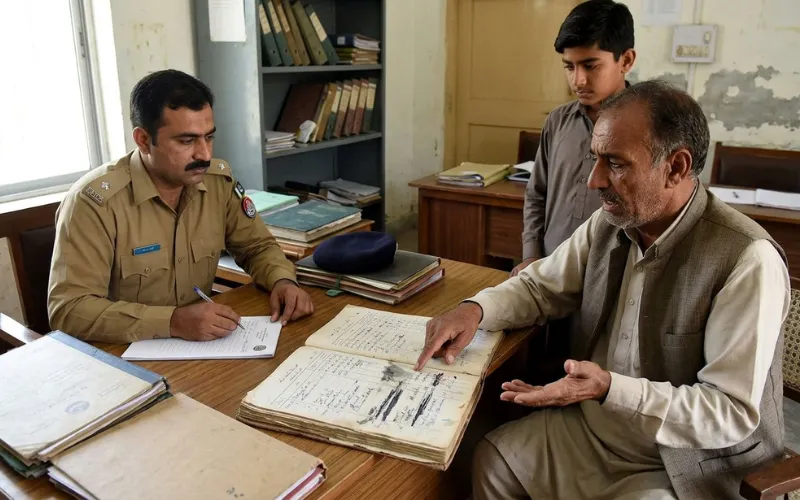

To report manual land record tampering in Punjab, file a complaint through the PLRA’s complaint system at rodportal.punjab-zameen.gov.pk/complaint-page or call 042-111-22-22-77 for administrative tampering within the PLRA system. For criminal tampering by a Patwari or revenue official, file with the Anti-Corruption Establishment Punjab by visiting their regional office or calling their helpline at 1350. If illegal possession results from the tampering, file before the Punjab Property Tribunal under the POIP Ordinance 2026 through poip.punjab-zameen.gov.pk. If you remain unsatisfied with any of these channels, escalate to the Ombudsman Punjab at ombudsmanpunjab.gov.pk.
Manual record tampering in Punjab’s land system takes several forms. A Patwari can enter a mutation without a supporting document. A revenue official can alter an area measurement, a name, or a share entry in the register. Someone can present a forged document at an ARC to initiate a fraudulent mutation. In each case, the official digital record then reflects a false position that becomes the basis for further transactions, legal proceedings, and financial decisions. Knowing which authority to approach, with what evidence, and through which channel is what determines whether the complaint leads to correction and accountability or disappears into administrative inaction.
Understanding the Type of Tampering Before You File
The channel you use depends on what kind of tampering occurred and who was responsible. Not every record error is tampering, and not every tampering case goes to the same authority. Before filing, identify which category applies to your situation.
Data entry errors where the computerized record differs from the original scanned manual record are correction matters, not tampering reports. These go through the Fard Badar process at the Arazi Record Centre or Arazi Moawin center and do not require a complaint to an anti-corruption body.
Deliberate alteration of an existing correct record by a revenue official, whether changing a name, altering an area, inserting or deleting a mutation entry, or facilitating a fraudulent transfer, is criminal tampering. This category requires both a PLRA administrative complaint and a complaint to the Anti-Corruption Establishment, which has the authority to investigate public servants.
A fraudulent mutation entered on the basis of forged documents submitted by private individuals to the ARC, whether or not a Patwari or ARC official was complicit, is also criminal tampering and may additionally require filing before the Punjab Property Tribunal if the result was illegal occupation of your land.
Channel One: PLRA Complaint System
The first and most direct channel for any complaint about a land record, including suspected tampering, is the PLRA’s own complaint management system. This system is managed by a Monitoring and Quality Assurance wing within PLRA that handles complaints, investigates, and can refer serious cases to appropriate authorities.
The PLRA provides three access points for complaints. The primary online channel is the e-complaint form at rodportal.punjab-zameen.gov.pk/complaint-page. This form accepts complaints about any PLRA service or procedure and allows attachment of supporting documents. The form can be completed in Urdu or English. You can also reach the PLRA complaint system by phone through the Universal Access Number at 042-111-22-22-77, which operates from 9:00 AM to 5:00 PM, Monday to Friday. For direct complaints by email, use complaints.pulse@punjab-zameen.gov.pk.
The PLRA’s complaint handling structure specifies that the first point of contact for any complaint is the Service Center Incharge at the Arazi Record Centre where you have been dealing. If you are dissatisfied with the response from the SCI, escalate by re-logging the complaint and requesting escalation to a senior officer. The PLRA has confirmed that a third-party firm, ABACUS Ltd., handles initial complaint responses through the UAN, while another firm manages the e-complaint portal, both operating under PLRA oversight.
When filing through the PLRA system for suspected tampering, include the following in your complaint:
- Your CNIC and contact details
- The property’s district, tehsil, mauza, and Khewat or Khasra number
- The specific mutation number or Fard Badar entry that you believe was tampered with
- The date you noticed the discrepancy
- Evidence of the correct record, such as an older Fard, a previous mutation copy, or a registered deed
- The name of the official or ARC you believe was involved, if known
Your complaint will be logged, given a tracking number, and monitored through the PLRA system. You can track its progress in real time through the portal.
Channel Two: Anti-Corruption Establishment Punjab
When tampering involves a public servant, specifically a Patwari, Naib Tehsildar, ARC official, or any other government employee, the Anti-Corruption Establishment Punjab has the authority and mandate to investigate. The ACE is an attached department of the Services and General Administration Department and operates regional offices across Punjab.
Complaints to ACE are lodged before the office of the Director General, Additional Director General, Regional Directors, or Deputy Directors, depending on which is closest and most accessible. The ACE also has a dedicated helpline at 1350 and a mobile app called Report Corruption through which complaints can be submitted with audio, video, or document evidence. The app allows anonymous reporting, which matters if a complainant fears retaliation.
The ACE’s process after receiving a complaint begins with an enquiry conducted by an Enquiry Officer who validates the genuineness of the complaint. If the enquiry supports the allegations, the case proceeds to formal registration and investigation. If sufficient evidence establishes criminal misconduct, the ACE can register an FIR and proceed to prosecution before a Special Anti-Corruption Court.
Convictions for land record tampering by revenue officials in Punjab have resulted in significant sentences. Documented cases include a Patwari in Rawalpindi sentenced to 31 years imprisonment for forging ownership documents and facilitating fraudulent mutation of a property worth approximately three billion rupees, and a Patwari and Naib Tehsildar in Sargodha receiving 20-year sentences for tampering with land records and selling property that did not belong to them. These outcomes are only possible when complaints reach the ACE with documentary evidence.
What to include in an ACE complaint for land record tampering:
- A clear written statement of the facts in chronological order
- Copies of the original correct record showing what the position should be
- Copies of the allegedly tampered record showing what was falsely entered
- Any forensic evidence if available, such as alterations visible in original documents
- Names and designations of the public servants you believe were involved
- Evidence of any payment demanded or received in connection with the tampering

Channel Three: Punjab Property Tribunal for Illegal Possession Cases
If the record tampering resulted in someone else being shown as the owner of your property and they are now claiming or physically occupying it, the case crosses from administrative tampering into illegal occupation. In that situation, the Punjab Protection of Ownership of Immovable Property (Amendment) Ordinance 2026 provides a faster judicial pathway.
File a complaint before the Punjab Property Tribunal through the POIP portal at poip.punjab-zameen.gov.pk. The tribunal is presided over by a serving Additional Sessions Judge and must forward your complaint to the Scrutiny Committee within 3 days. The committee investigates and submits its report within 30 days. The tribunal must then issue its final decision within a further 30 days.
This route is specifically designed for cases where the end result of tampering is illegal occupation or land grabbing. The tribunal can issue interim protective orders at any stage, including sealing the property, and can impose criminal sentences of 5 to 10 years imprisonment and fines of up to Rs10 million on those found to have illegally occupied the property. Any transfer of the disputed property after your complaint is filed is automatically null and void.
Channel Four: Ombudsman Punjab for Maladministration
If you have exhausted the PLRA complaint system and are dissatisfied with how your complaint was handled, or if you believe PLRA officials themselves mishandled or suppressed your tampering complaint, the Ombudsman Punjab is the independent escalation authority.
The Ombudsman Punjab investigates complaints of maladministration against public authorities, government departments, and their officers and employees. PLRA falls under this jurisdiction. The Ombudsman can investigate any allegation of maladministration, including failure to act on a legitimate complaint, biased handling of a record correction request, or improper closure of a tampering complaint.
File with the Ombudsman Punjab through ombudsmanpunjab.gov.pk. The PLRA’s own complaint management documentation formally identifies the Ombudsman as the independent complaint reviewer under Section 9(1) of the Punjab Office of the Ombudsman Act 1997, which means this escalation path is institutionally recognized, not merely theoretical.
Channel Five: CM Punjab Complaint Center
PLRA is integrated into the Chief Minister’s Complaint Center, accessible by calling 0800-02345. This channel is appropriate when you have already filed through the PLRA system and the response has been unsatisfactory or there has been no response within a reasonable time. The CM Complaint Center can escalate complaints within the PLRA’s administrative hierarchy and create accountability pressure at a level above the local ARC.
What Evidence You Must Collect Before Reporting
The single most important factor in a successful tampering report is documented evidence of what the record showed before the tampering and what it shows now. Tampering is a discrepancy between a correct record and an incorrect one, and proving tampering means proving both states existed at different times.
Gather the following before filing any complaint:
- The most recent Fard showing the alleged tampering
- An older Fard or mutation copy showing the correct position
- Your original title documents, such as the registered sale deed, inherited property documents, or court decree
- Any witness who can attest to the previous record position
- Bank or financial records referencing the property in its correct state
- Photographs of any physical evidence on the ground
If the tampering involved a specific mutation entry, obtain the mutation case number and any receipts from the ARC for the date the mutation was processed. The Roznamcha Waqiati, the Patwari’s daily diary, is a key document in tampering cases because mutations entered without a corresponding Roznamcha entry, or with Roznamcha entries that don’t match the mutation register, are a strong indicator of fraud. Mention this specifically in your complaint to prompt the investigating officer to retrieve and examine those records.
Protecting Your Property While the Complaint Is Being Processed
Filing a complaint does not automatically freeze the record or prevent further transactions on the property during the investigation. Take these protective steps immediately after you discover tampering and before or alongside filing your complaint.
Apply for a stay order or incorporation of the court or complaint proceedings in the PLRA database by submitting the relevant documents at the ARC. This creates a flag on the record that alerts future users of the PLRA portal that the record is under dispute. Request the PLRA complaint officer to note the complaint in the property’s PLRA database entry as a pending dispute.
If you have not already subscribed to PLRA’s property alert service, do so immediately. The alert subscription notifies you whenever any mutation or change is proposed against your property in the system, which acts as an early warning if anyone attempts to further manipulate the record while your complaint is pending.
For serious cases involving active attempts to transfer or alienate the property, approach the Punjab Property Tribunal directly for an interim protective order without waiting for the full 60-day process. The tribunal has the authority to seal the property and prohibit any transfer at any stage of proceedings.

Frequently Asked Questions
What is the difference between a record error and record tampering?
A record error is an unintentional mistake such as a data entry discrepancy where the computerized record differs from the scanned original. This is corrected through the Fard Badar process at the ARC. Record tampering is a deliberate alteration of a correct record by a revenue official, or the entry of a mutation based on forged documents. Tampering requires a complaint to the PLRA complaint system and, where a public servant is involved, to the Anti-Corruption Establishment Punjab.
Can I report tampering anonymously?
Yes, through the ACE’s Report Corruption mobile app, you can submit a complaint with audio or video evidence without disclosing your identity. The app is specifically designed to allow anonymous reporting. For PLRA e-complaints and the Ombudsman Punjab, identification is required for the complaint to be formally processed and for you to receive updates.
What should I do if the Patwari is asking for money to enter a mutation correctly?
Do not pay. If possible, record the demand using audio or video on your phone. Submit the recording to the ACE through their Report Corruption app or helpline at 1350. Also file a complaint with the PLRA through the UAN at 042-111-22-22-77. Under the 2026 ordinance, Patwaris can only process inheritance mutations and have no authority over other transaction mutations. Any Patwari claiming authority over sale or other transaction mutations and demanding payment for it is acting outside the law.
How long does an ACE investigation into land record tampering take?
The ACE begins with an enquiry after receiving a complaint to validate its genuineness. If the enquiry supports the allegations, a formal case is registered and investigated. The timeline varies depending on the complexity of evidence and the number of parties involved. Documented cases of Patwari tampering have proceeded to conviction at Anti-Corruption Courts, though the total process from complaint to conviction can take months or longer. Parallel action through the PLRA system can produce faster administrative correction of the record itself while the criminal investigation proceeds separately.
Can I file in more than one forum simultaneously?
Yes. You can simultaneously file an administrative complaint with the PLRA for record correction, a criminal complaint with the ACE for the conduct of the public servant involved, and a complaint before the Punjab Property Tribunal if illegal occupation has resulted. These are separate proceedings with different purposes and different outcomes. The criminal ACE proceedings do not substitute for the administrative Fard Badar correction, and the Property Tribunal proceedings address the occupation consequence independently of who tampered with the record.