
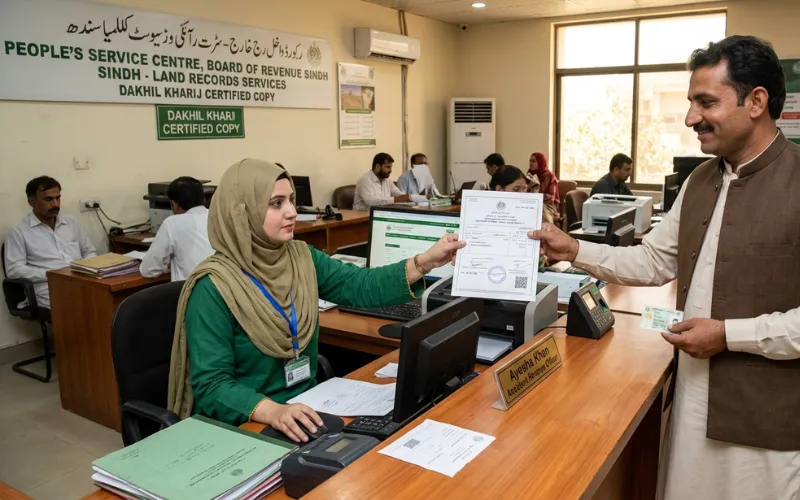

Anyone who owns land in Pakistan, whether inherited, purchased, or received as a gift, will eventually need a certified copy of their Record of Rights. This document is not just a formality. It is the official government-issued proof of your legal position on a piece of land, and without it, you cannot complete a sale, apply for a loan against property, resolve a boundary dispute, or file for inheritance. Knowing how to get one, where to go, and what to bring saves you time and prevents the kind of confusion that turns a simple request into weeks of back-and-forth.
What the Record of Rights Actually Is
The Record of Rights is the formal authenticated register that captures every legally recognized right attached to a piece of land within a revenue estate. It is not a single document you carry in a file. It is a consolidated set of entries maintained by the revenue department that records ownership, possession, cultivation details, water rights, and any liabilities or encumbrances against the land.
In Pakistan’s land revenue system, the Record of Rights is formally prepared as the Jamabandi at each revision cycle, typically every four years, and is attested by the revenue officer to give it legal authority. The Fard, which is the individual ownership certificate most people are familiar with, is essentially a certified extract drawn from this broader Record of Rights. Understanding what a Fard is in revenue clarifies that when you request your ownership certificate, you are requesting a specific slice of the full Record of Rights relevant to your survey number.
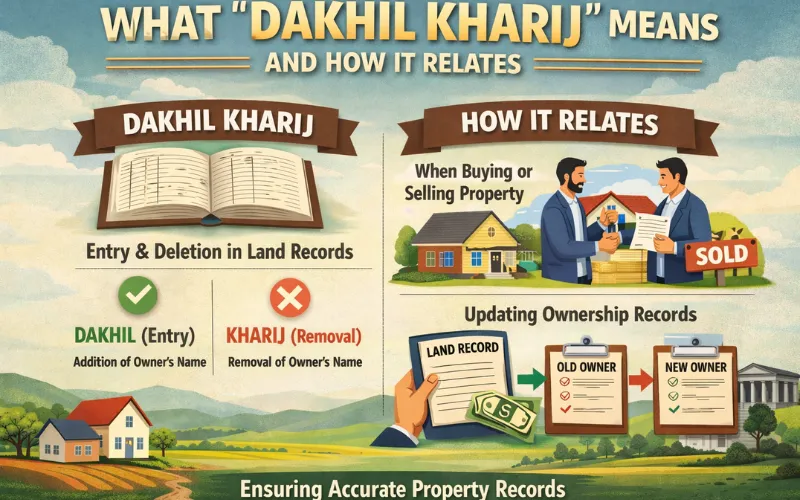
What Dakhil Kharij Means and How It Relates
The term Dakhil Kharij refers specifically to the mutation register, which records the entry and exit of names from the land record as ownership changes hands. Dakhil means entry, Kharij means exit. Together they describe the process by which one owner’s name is removed and another’s is entered following a legal transfer whether through sale, inheritance, gift, or court order.
When people ask for a certified copy of their Dakhil Kharij, they are typically asking for one of two things. Either they want the mutation order itself, which is the formal record of how ownership changed, or they want the updated Fard that reflects the new ownership after the mutation was sanctioned. Both documents fall within the broader Record of Rights and both can be obtained from the revenue office. The difference between Jamabandi and Intkal explains how these two records relate to each other and why both are useful depending on your specific purpose.
Who Issues Certified Copies and From Where
Certified copies of the Record of Rights in Pakistan are issued by the revenue department at the local level. The specific official and office depend on which document you need and which province your land falls in.
For a certified Fard, which is the most commonly requested document, the Patwari of your Halqa is the primary point of contact. The Patwari maintains the current register and issues certified extracts on payment of the prescribed fee. For a certified copy of the mutation order (Intkal), you need the Tehsildar’s office, because mutations are sanctioned at the Tehsildar level and the official record of each mutation order is kept there.
The duties of a Patwari in Pakistan include issuing certified copies of all village-level records to landowners on request. Refusal to issue a certified copy without valid reason is a dereliction of duty that can be escalated to the Qanungo or the Tehsildar. The role of the Qanungo includes supervising Patwari conduct and ensuring citizens receive the records they are entitled to within a reasonable time.
Documents You Need to Bring
Arriving at the revenue office with the right documents makes the process significantly faster. The requirements are consistent across most districts, though minor variations exist between provinces.
The following items are typically required when requesting a certified copy of the Record of Rights:
- Your original CNIC and a photocopy
- The survey number or Khasra number of the relevant landholding
- The Hissa number if the land has been subdivided among multiple owners
- The name of the Deh or revenue village and the Taluka or Tehsil
- A copy of any previous Fard or mutation order you already hold, if available
- Payment for the prescribed fee, which varies by province and document type
If you are requesting on behalf of someone else, such as an elderly parent or a deceased relative’s estate, you should also bring a written authorization letter or succession certificate depending on the situation.
Step-by-Step Process for Obtaining the Certified Copy
The process from request to receipt typically takes between one and several working days depending on whether the records are digitized or still held in physical registers. Here is how the process works at each stage.
Step 1: Identify the Correct Patwari Halqa Each revenue village falls within a specific Patwari Halqa. If you do not know which Patwari covers your land, visit the Tehsildar’s office and ask which Patwari circle your Deh falls under.
Step 2: Submit Your Request Approach the Patwari with your survey number details and CNIC. State clearly whether you need a Fard (ownership certificate), a copy of a specific mutation order, or both. In many provinces, a simple written application is required alongside your verbal request.
Step 3: Pay the Prescribed Fee Land record fees in Pakistan are set by provincial rules and are nominal in most cases. Get a receipt for any payment made and keep it until you have received your certified document.
Step 4: Receive and Verify the Document The certified copy should carry the Patwari’s signature and official seal for a Fard, or the Tehsildar’s signature and seal for a mutation order. Before leaving the office, verify that the survey number, owner name, area, and other key details on the document match your own records. Errors in certified copies do occur, particularly where data was digitized from handwritten registers, and it is easier to get them corrected on the spot than after the fact.
Step 5: Cross-Check Against the Jamabandi If you have any doubt about whether the certified copy reflects the current authenticated record, ask to see the most recent Jamabandi entry for your survey number. The Jamabandi in revenue is the four-yearly authenticated ownership snapshot, and the Fard you receive should be consistent with it.
Online Options for Obtaining Land Records in Pakistan
Several provinces have moved parts of this process online, reducing the need for physical visits for basic ownership verification.
Punjab offers the most mature digital system through the Punjab Land Records Authority, where citizens can access and print Fard documents directly from the PLRA website or designated service centers using a survey number or owner’s name. The record is linked to CNIC data and the printed Fard carries a QR code that can be verified independently.
Sindh provides access through LARMIS, the Land Administration and Revenue Management Information System, where digitized records can be viewed and in some districts downloaded. However, not all Dehs in Sindh are fully digitized yet, and for interior districts a physical visit remains necessary.
KPK and Balochistan have digitization programs underway but physical office visits are still required in most areas for certified copies that carry official seals.
For provinces with online access, the process of checking land ownership in Pakistan has become significantly more accessible, reducing both time and opportunity for unofficial payments to intermediaries.
When You Need the Record of Rights Most
Understanding the situations where a certified Record of Rights is not just useful but legally required helps you plan ahead rather than scrambling for documents under pressure.
The most common situations where this document becomes essential include the following:
- Before completing any property sale or purchase, where the buyer needs to verify the seller’s ownership and confirm no encumbrances exist
- When applying for a bank loan or mortgage against land, where the lender requires certified proof of title
- During inheritance proceedings, where the certified record establishes what the deceased owned before the estate is divided among heirs
- When filing a court case involving land, where the Record of Rights serves as primary documentary evidence
- When applying for map approval or construction permits, where authorities require proof of ownership over the plot being developed
- During partition proceedings when dividing land among heirs, where each heir’s share must be officially confirmed before physical division
What to Do If Your Record Has an Error
Errors in the Record of Rights are more common than they should be, particularly in districts where digitization was done by manually re-entering data from old handwritten registers. The most common problems include wrong area measurements, outdated owner names where a mutation was processed but not yet reflected in the Fard, incorrect Hissa numbers, and encumbrances that were discharged but never removed from the record.
If you find an error in your certified copy, do not use the document for any transaction until it is corrected. Submit a written application to the Tehsildar or district revenue officer describing the error and attaching the supporting documents that show what the correct entry should be. The officer will direct a field inquiry and, if the error is confirmed, order the Patwari to correct the register.
Fraud and manual errors in property records are among the leading causes of land disputes in Pakistan, and catching an error in your Record of Rights early, before it causes a transactional problem, is far better than discovering it when a sale is about to fall through or a legal case is already underway.
Protecting Your Record After Receiving the Certified Copy
Once you have your certified copy, store it properly alongside your other property documents including the original sale deed, previous mutation orders, and payment receipts for any revenue dues. A well-organized property file that includes the certified Record of Rights, the most recent mutation order, and proof of any paid arrears gives you a complete and defensible ownership package.
If your land has been registered through formal sale deed and mutation, keeping a copy of the registered sale deed alongside the certified Fard creates a two-document ownership record that is much harder to challenge than either document alone.
For overseas Pakistanis who cannot visit revenue offices in person, safe ways for overseas Pakistanis to invest in and manage land include granting a power of attorney to a trusted representative who can legally request certified copies and manage record-related applications on their behalf.

Frequently Asked Questions
What is the Record of Rights in Pakistan’s land revenue system
The Record of Rights is the comprehensive authenticated register of all legally recognized rights attached to land within a revenue estate. It is formally prepared as the Jamabandi at each four-year revision cycle and is attested by the revenue officer. It records ownership, possession, cultivation details, encumbrances, and water rights for every survey number in the revenue village. The Fard, which is the individual ownership certificate most people request, is a certified extract drawn from this broader Record of Rights for a specific survey number.
What is Dakhil Kharij and is it the same as the Record of Rights
Dakhil Kharij refers specifically to the mutation process through which names are added or removed from the land record when ownership changes. Dakhil means the entry of the new owner’s name and Kharij means the exit of the previous owner’s name. It is not the same as the full Record of Rights but is a component of it. When ownership changes through sale, inheritance, or gift, the mutation order produced through Dakhil Kharij becomes part of the Record of Rights and is reflected in the updated Fard issued afterward.
How long does it take to get a certified copy of the Record of Rights
In districts with fully digitized records, a certified Fard can often be issued within the same day or within one to two working days. In areas where records are still held in physical registers, the process may take longer depending on the Patwari’s availability and the condition of the original records. Online portals in Punjab allow immediate access and printing. For mutation orders specifically, which are kept at the Tehsildar’s office, the processing time depends on whether the mutation is recent or requires retrieval from archived records.
Can someone else collect the certified copy on my behalf
Yes. A representative can collect a certified copy of the Record of Rights on your behalf if they carry a written authorization signed by the landowner along with a copy of the landowner’s CNIC and their own CNIC. For situations involving overseas Pakistanis or physically incapacitated owners, a formally executed power of attorney gives the representative broader authority to handle all land record related applications and collections on an ongoing basis.
What should I do if my certified Fard shows the wrong owner’s name
If the certified Fard shows an incorrect or outdated owner’s name, submit a written application to the Tehsildar with your supporting documents, such as your sale deed, mutation order, or succession certificate, showing what the correct entry should be. Do not use an incorrect Fard for any transaction. The Tehsildar will direct the Patwari to investigate and correct the register if the error is confirmed. If the error is related to a pending mutation that was sanctioned but not yet reflected in the record, follow up specifically on the mutation update rather than filing a general correction request.