
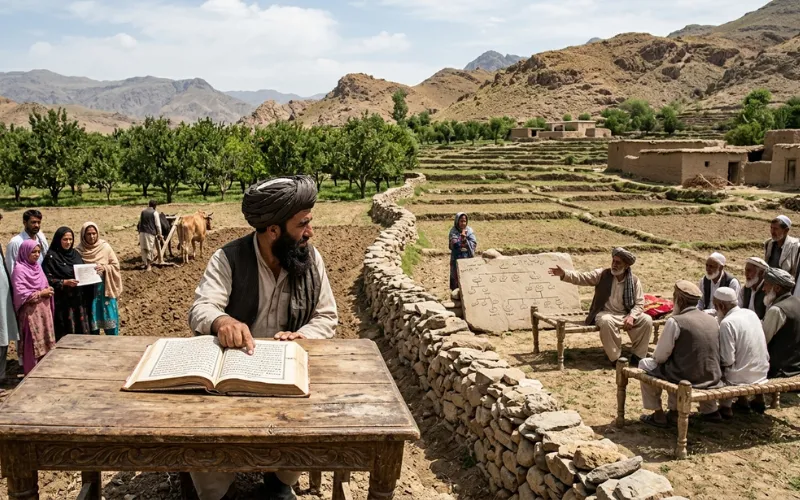

In Khyber Pakhtunkhwa, the legal framework for land inheritance is governed by the West Pakistan Muslim Personal Law (Shariat) Application Act 1962, which mandates that inheritance for all Muslims follows Islamic Sharia regardless of local custom. However, the customary law system known as Riwaj, which historically excluded women from inheriting agricultural land in Pakhtun society, continues to operate in practice particularly in rural and tribal districts. KPK has enacted two additional provincial laws, the KPK Enforcement of Women Ownership Act 2012 and the KPK Enforcement of Women’s Property Rights Act 2019, specifically to address this gap between the statutory law and customary practice. Under the 1962 Act and these provincial laws, daughters, widows, and sisters are legally entitled to inherit land. The legal entitlement exists on paper. Enforcement in practice, particularly in former tribal areas, remains the central challenge.
KPK’s land inheritance situation is one of the most legally complex in Pakistan precisely because it sits at the intersection of three competing systems. Islamic Sharia mandates specific inheritance shares. Colonial-era codified custom, the Riwaj-nama system, excluded women from land in much of the region. And modern provincial legislation has tried to enforce Sharia entitlements against those customary barriers. Anyone dealing with a land inheritance matter in KPK, whether as an heir, a family member, or a legal representative, needs to understand how these three systems interact and which one applies in their specific situation.
The Islamic Sharia Framework for Land Inheritance
The foundational legal framework for inheritance in KPK, as throughout Pakistan, is Islamic Sharia law as applied through the West Pakistan Muslim Personal Law (Shariat) Application Act 1962. This Act was enacted specifically to override customary laws that denied women their Sharia-mandated inheritance shares. The Act states clearly that in matters of inheritance, Sharia shall apply as the rule of decision, notwithstanding any custom or usage having enforceability at the time.
The Sharia shares for land inheritance are fixed and not subject to negotiation between heirs. The principal shares for the most common heir categories are:
- A son receives double the share of a daughter when both are heirs
- A daughter receives half the share of a son in the same category
- A wife receives one-eighth of the estate if there are children, and one-quarter if there are no children
- A husband receives one-quarter of the estate if there are children, and one-half if there are no children
- A mother receives one-sixth of the estate if there are children, and one-third if there are no children
- A father receives one-sixth of the estate if there are children
The key principle is that no legal heir can be entirely deprived of their Sharia share. A son cannot receive everything at the expense of daughters. Male relatives cannot collectively exclude female relatives from the estate. Section 3 of the 1962 Act goes further: it explicitly ended all land holdings that a female was restricted from holding by custom, meaning that customary restrictions on female ownership of land that existed before 1962 were abolished by operation of law.
The Exclusion Principle in Sharia determines priority between competing heirs. Grandchildren do not inherit if their parent, who would have been the heir, is alive. Brothers and sisters are excluded if the deceased has children. More distant male relatives are excluded when sons are present. These are the only legitimate exclusions in Sharia. Exclusion of daughters, sisters, or wives simply because they are female, which is the pattern that customary law in KPK has historically enforced, has no basis in Sharia and is explicitly illegal under the 1962 Act.
What Riwaj Is and How It Conflicted with Sharia
Riwaj, also rendered as Rewaj or Dastoor, is the customary law system practiced among Pakhtun tribal communities in KPK. It was documented and codified under British colonial administration in the form of Riwaj-namas, written records of local customary practices compiled by political officers and settlement officers during the colonial era. These documents recorded what customs each community claimed to follow, and courts then used them as evidence of applicable customary law in disputes.
In Pakhtun customary law, land was considered a patrilineal holding, passing from father to son, or in the absence of sons, to brothers and paternal male relatives. Women were almost entirely excluded from inheriting agricultural land because the Riwaj treated land as attached to the male lineage rather than as heritable property distributed among all legitimate Sharia heirs. Daughters received a form of compensation, usually through a larger mehr (dower) or through the transfer of movable property, but were effectively excluded from the land itself.
The tension between Riwaj and Sharia was present from the beginning. Academic researchers studying this history note that every Riwaj-nama formally declared adherence to Shariat, but in practice not a single clause of the documented Riwaj reflected Sharia principles regarding women’s inheritance rights. The declaration was procedural cover; the practice was the exclusion of women from land.
The 1962 Act was enacted specifically to break this pattern. By declaring Sharia the rule of decision in all inheritance matters regardless of custom, it legally displaced the Riwaj’s power over inheritance. However, displacement of law on paper and change of practice on the ground are different things, which is why KPK required additional provincial legislation decades later.
KPK Enforcement of Women Ownership Act 2012
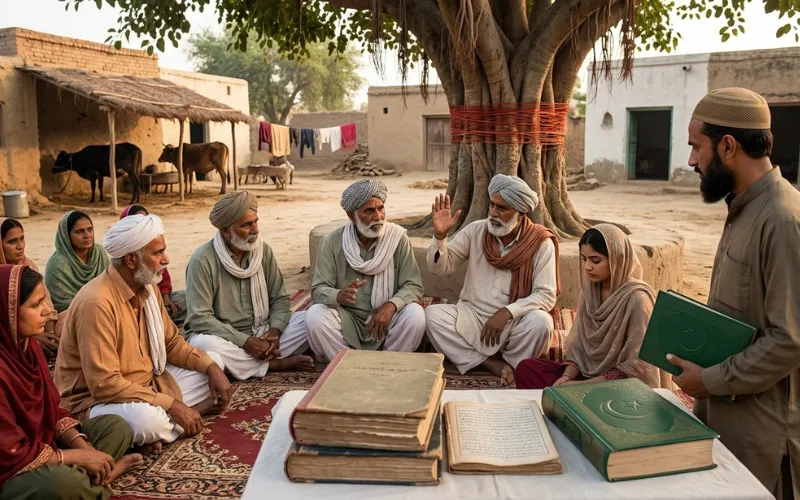
The Khyber Pakhtunkhwa Enforcement of Women Ownership Act 2012 was the first KPK-specific provincial legislation addressing the gap between statutory inheritance rights and practical enforcement. The Act extended to the whole of the KPK province and came into force immediately upon promulgation. It provided legal protections for women’s ownership rights, including penalties for those who prevented women from accessing their property by means of coercion, fraud, fabrication, forgery, or any other means.
This legislation was significant because it added a specifically KPK-level enforcement mechanism on top of the national Shariat Act’s substantive right. The 1962 Act said women could inherit. The 2012 Act said interfering with that inheritance was a punishable offence under provincial law. Combined, they meant that male relatives who denied a daughter or sister her land share were not just acting against Islamic law and national legislation, but also against a provincial criminal provision.
KPK Enforcement of Women’s Property Rights Act 2019
The most recent and more developed provincial instrument is the Khyber Pakhtunkhwa Enforcement of Women’s Property Rights Act 2019. This Act was described by the KP Ombudsperson for Women, Rukhshanda Naz, as providing protection to women’s rights of ownership and possession of properties owned by them, ensuring that such rights are not violated by any means of harassment, coercion, force, or fraud. It created an effective and speedy redress mechanism specifically for property rights violations.
A key institutional feature of the 2019 Act is the role it gave to the KP Ombudsperson for Protection Against Harassment of Women at Workplace, which was designated as the primary complaint-receiving body for women whose property rights are violated. Since the Act came into force, the Ombudsperson’s office has received over 1,700 complaints related to women’s inheritance rights in KPK. More than 500 cases were resolved as of 2025, with women actually receiving their property in a number of those cases. The sheer volume of complaints demonstrates both the widespread nature of the violation and the fact that women are increasingly aware of and using the formal mechanism.
The Merged Districts: A Special Challenge
The Newly Merged Districts of KPK, which were formerly the Federally Administered Tribal Areas (FATA) and merged with KPK in May 2018, present a distinct situation. Under FATA, the Frontier Crimes Regulations and the Political Parties Act applied, and national laws including the Shariat Act 1962 were explicitly excluded from the tribal areas. Women in these areas were governed almost entirely by Riwaj, with no statutory override available.
Following the merger in 2018, the 1962 Shariat Act, the 2012 and 2019 KPK property rights acts, and all other provincial laws were extended to the merged districts. However, as civil society organizations and the KP Ombudsperson have documented, local Riwaj and the lack of functioning administrative infrastructure in many of these districts have severely hindered implementation. Women from merged districts including Bajaur, South Waziristan, and Kurram have filed complaints with the Ombudsperson’s office, demonstrating both awareness of their rights and the barriers they face in enforcing them locally.
The situation in the merged districts is essentially a compressed version of the broader KPK challenge: the law is clear, but the customary framework is deeply entrenched, and the institutions needed to enforce the law at the district level are not yet fully developed.
How to Enforce Inheritance Rights in KPK Practically
Understanding the legal framework is one step. Knowing how to use it when a family member is denying a lawful inheritance share is the practical question most people actually need answered.
The inheritance mutation process in KPK follows the same general mechanism as in Punjab. A legal heir submits an application at the relevant revenue office or Arazi Record Centre with the death certificate, family registration certificate, CNIC copies of all heirs, and an affidavit. The Patwari conducts field verification of the Shajra Nasab genealogical record. The mutation is entered and attested by the relevant revenue officer.
If male heirs are blocking the inheritance mutation by refusing to cooperate with the process, or by providing false information, the aggrieved female heir has several parallel avenues:
- File a complaint with the KP Ombudsperson for Protection Against Harassment of Women at Workplace, who has jurisdiction under the 2019 Act specifically for property rights violations
- File a civil suit in the District Court for declaration of inheritance rights and partition of the property
- Lodge a complaint under Section 498-A of the Pakistan Penal Code, which criminalizes depriving women of inheriting property through deceitful or illegal means, with a potential sentence of five to ten years imprisonment and a fine of Rs1 million
- Report the matter to the local police if fraud, fabrication, or forgery of documents is involved
There is no time limit for filing an inheritance claim in Pakistan. A woman can assert her right to inherited property at any age, regardless of how long ago the original owner died. Male relatives sometimes use the passage of time as an informal pressure mechanism, implying the right has expired. It has not. Courts have been explicit on this point.
The Gap Between Law and Practice
Senior lawyers and civil society researchers in KPK have documented that over 90 percent of women in the province are denied their inheritance rights in practice. The legal framework is complete and comprehensive. The Shariat Act 1962, the provincial Acts of 2012 and 2019, the PPC Section 498-A criminal provision, and the constitutional guarantee under Article 23 all align in giving women full legal entitlement to their land shares. The gap is not legislative. It is cultural, institutional, and enforcement-related.
The cultural mechanism of exclusion in Pakhtun society often operates through a combination of social pressure and informal agreement. A daughter is told that by taking her share she will break family unity, damage her brothers’ economic position, or dishonor the family. In many cases, the property distribution among heirs is completed by male relatives without informing female heirs, or female heirs are presented with a small cash payment framed as their full entitlement.
Understanding that accepting a cash payment in lieu of a land share does not legally constitute a valid waiver of Sharia inheritance rights unless the heir does so knowingly and without coercion is important. Courts have consistently held that a woman cannot be coerced into giving up her inheritance share, and that any document purporting to waive her rights that was signed under pressure is challengeable.
Shia Inheritance Law in KPK
A portion of KPK’s population, particularly in certain Kurram and other districts, follows Shia fiqh rather than Hanafi Sunni jurisprudence. The distribution of shares under Shia inheritance law differs in some respects from Sunni inheritance calculations, particularly in how shares are calculated for different heir categories and how residual estate is distributed. The Shariat Act 1962 applies to all Muslims, and courts in these areas apply the appropriate fiqh based on the deceased’s established religious identity. If there is a dispute about which fiqh applies, the court examines the deceased’s personal religious practice and community affiliation.
What Happens When Custom and Sharia Conflict in a Revenue Court
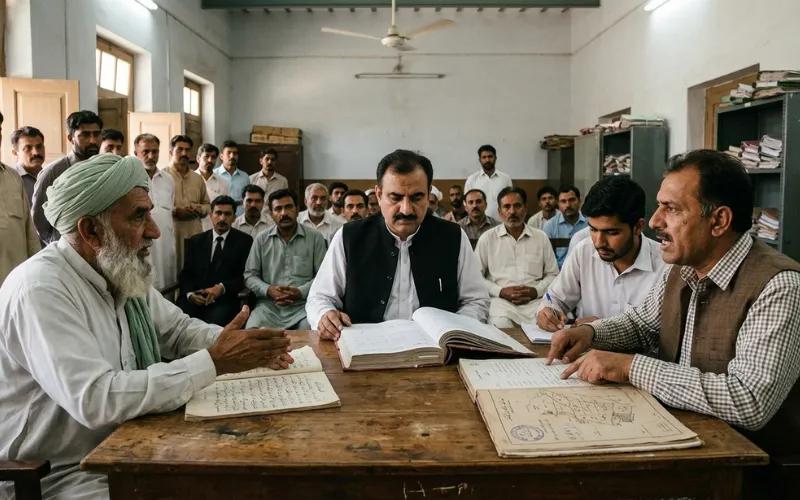
When an inheritance mutation is presented at the revenue office and male heirs contest the female heir’s inclusion on the basis of customary practice, the revenue officer is legally bound to apply the Shariat Act 1962 and include all legal Sharia heirs in the mutation. Custom is not a permissible basis for excluding a female heir from an inheritance mutation in Pakistan. A revenue officer who attests an inheritance mutation that excludes a legal female heir is acting in violation of the 1962 Act and the applicable revenue rules.
If a revenue officer nevertheless excludes a female heir at the insistence of male relatives, this is both an administrative error correctable through appeal within the revenue hierarchy and potentially a criminal matter under the PPC if fraud or forgery was involved. The compulsory heirs in Pakistani inheritance law cannot legally be excluded from a mutation regardless of customary pressure on the revenue official.
Frequently Asked Questions
Does Islamic Sharia or Riwaj (customary law) apply to land inheritance in KPK?
Islamic Sharia applies. The West Pakistan Muslim Personal Law (Shariat) Application Act 1962 mandates Sharia as the rule of decision in all inheritance matters for Muslims, overriding any custom or usage to the contrary. Riwaj is not legally applicable to inheritance in KPK and has not been since 1962. The practical persistence of customary exclusion of women from land is a gap between law and practice, not a reflection of what the law actually says.
Can daughters inherit agricultural land in KPK?
Yes. Under both Islamic Sharia and the 1962 Act, daughters have a fixed inheritance share in agricultural land as in all other property. A daughter’s share is half that of a son in the same category of heirs. She cannot be legally excluded from the inheritance mutation. If male relatives are preventing her from inheriting, she can file a complaint with the KP Ombudsperson under the 2019 Act or file a civil suit in the District Court.
What is the KPK Enforcement of Women’s Property Rights Act 2019?
It is a provincial act that provides a specific redress mechanism for women whose property ownership rights are violated through harassment, coercion, force, or fraud. It designates the KP Ombudsperson for Protection Against Harassment of Women at Workplace as the primary authority for receiving and resolving such complaints. Since its enactment, the Ombudsperson’s office has received over 1,700 inheritance-related complaints from across KPK.
Is there a time limit for claiming inheritance in KPK?
No. A woman can assert her right to inherited land at any age regardless of how long ago the original owner died. There is no statutory time limit on inheritance claims in Pakistan. Courts have held that the passage of time does not extinguish a legal heir’s entitlement to their Sharia share.
Do the inheritance laws apply in the Newly Merged Districts (former FATA)?
Yes, as of the merger in May 2018. The 1962 Shariat Act and the KPK provincial property rights Acts were extended to the merged districts after FATA’s abolition. However, implementation in these districts remains challenging due to entrenched Riwaj traditions and limited administrative infrastructure, as documented by the KP Ombudsperson’s office and civil society organizations operating in the region.