
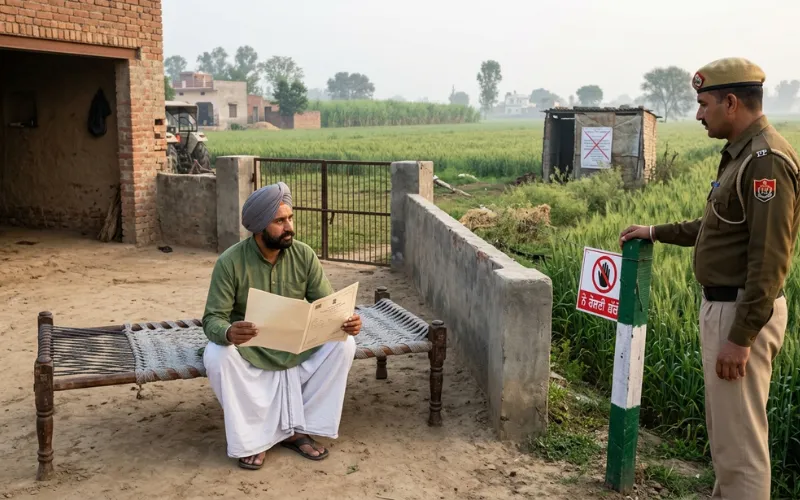

In Punjab, illegal land possession now carries a minimum of 5 years and a maximum of 10 years imprisonment along with fines of up to Rs10 million under the Protection of Ownership of Immovable Property (Amendment) Ordinance 2026, promulgated on February 17, 2026. Even attempting or helping someone grab property can result in 1 to 3 years in prison and a fine of up to Rs1 million.
For years, qabza groups operated with near impunity in Punjab. Civil courts were slow, administrative committees were weak, and the penalties that existed on paper rarely translated into consequences anyone feared. That changed materially when Governor Punjab Sardar Saleem Haider Khan promulgated this ordinance. The new law does not treat illegal occupation as a property dispute to be settled quietly. It treats it as a serious criminal offense with mandatory prison time and financial consequences severe enough to actually deter organized land grabbing.
What Type of Offense Illegal Possession Has Become
There is an important distinction that most people miss. Under the old system, illegal occupation of land was largely a civil matter. The aggrieved owner had to prove ownership in court, seek eviction, and go through an appeals process that could last years. Criminal consequences were rare and required separate proceedings.
The Punjab Protection of Ownership of Immovable Property (Amendment) Ordinance 2026 shifts this framework entirely. Illegal occupation is now a criminal offense by default. The moment someone occupies property through fraud, force, coercion, forgery, or misrepresentation, they have committed a crime prosecutable before a judicial tribunal, not just a civil wrong to be resolved through litigation. For anyone dealing with an encroachment on their land, this distinction matters enormously in terms of how quickly and decisively the state can act.

The Full Penalty Structure Explained
The ordinance creates a tiered penalty system that distinguishes between the main offender, those who help, and those who misuse the law with false complaints. Each category carries a distinct range of punishment.
Direct Illegal Possession
The most serious offense under the ordinance is direct illegal occupation. Anyone who physically or constructively occupies immovable property through any of the following methods faces the maximum penalty bracket:
- Deceit or fraud
- Forgery of documents
- Force or coercion
- Misrepresentation of ownership or title
The punishment for this category is a minimum of 5 years imprisonment, extendable to a maximum of 10 years, combined with a fine of up to Rs10 million. These two penalties can be imposed together or independently, at the tribunal’s discretion. There is no provision for the imprisonment to be reduced below 5 years for direct possession offenses.
Attempt, Abetment, and Conspiracy
Not everyone involved in land grabbing physically occupies the property. Fixers, document forgers, revenue officials who falsify records, and middlemen who arrange qabza operations are equally culpable but were rarely prosecuted under the old system because abetment in civil matters was not actionable in the same way.
The ordinance addresses this gap directly. Anyone who attempts to illegally occupy property, abets another in doing so, or enters a conspiracy toward that end now faces:
- Imprisonment from 1 to 3 years
- A fine of up to Rs1 million
This provision is significant for property fraud cases where the actual occupier is just the visible face of a larger organized operation. The people arranging the operation behind the scenes are now legally as vulnerable as the person physically sitting on the land.
Compensation for the Rightful Owner
Beyond criminal penalties, the ordinance includes a remedy that was largely absent from the previous framework. The tribunal has the authority to award monetary compensation to the lawful owner, with the minimum amount set at the officially notified value of the property. The tribunal can additionally order recovery of any profits the illegal occupant gained during the period of illegal possession.
This means that if a qabza group has been collecting rent from tenants on your property for two years before you recovered possession, the court can compel them to return those earnings. The compensation mechanism transforms this law from a purely punitive instrument into one that also restores the owner’s financial position.
The False Complaint Penalty Balances the Law
Any law that creates powerful enforcement tools can be misused. The ordinance anticipates this risk and builds in a direct deterrent against weaponizing the system against innocent parties.
If a person files a complaint under this ordinance that is found by the tribunal to be false, frivolous, or vexatious, that complainant faces:
- Imprisonment of up to 5 years
- A fine of up to Rs500,000
This provision matters in two ways. First, it protects legitimate landowners from having this law turned against them by a rival claimant in a contested inheritance dispute or a sale gone wrong. Second, it encourages only genuine complainants to use the tribunal system, which protects the efficiency of the new 60-day resolution timeline.
Who Can Be Prosecuted: The Expanded Definition of Accused
One of the most important and underreported aspects of the new penalty framework is who it applies to. Traditional property law enforcement in Pakistan has almost always focused on individual persons. This made it straightforward for organized groups to shelter liability inside institutional structures.
Under the 2026 ordinance, the definition of “accused” has been expanded to include:
- Individual persons
- Partnerships
- Companies and corporations
- Societies and trusts
- Religious institutions
A housing scheme operating on illegally occupied land, a trust claiming religious property without title, or a company running a commercial enterprise on disputed ground can now be prosecuted as an entity. Individuals within those organizations who were directing or facilitating the illegal occupation can also be held personally liable simultaneously. There is no longer a corporate or institutional shield.
What Happens to Property Transferred During a Dispute
A common tactic in contested property cases is to quickly sell, gift, or mortgage the disputed land once a complaint is filed, complicating the legal chain and making recovery harder. The ordinance closes this specific loophole with a blanket prohibition.
Any sale, lease, gift, mortgage, or other form of alienation of a disputed property made after a complaint has been filed before the tribunal is automatically null and void by law. The transaction has no legal standing regardless of whether the buyer or recipient was aware of the complaint. This protection takes effect the moment a complaint is registered and remains in force until the tribunal issues its final decision.
For anyone currently involved in buying property in Pakistan, this provision is a practical warning. Always verify whether any complaint has been filed against a property before completing a transfer, because a purchase made after a complaint registration will not legally hold.
How the Tribunal Enforces These Penalties
The penalties described above are enforced through a dedicated Punjab Property Tribunal established in each district. These tribunals are presided over by serving Additional Sessions Judges, replacing the previous structure of retired judges and administrative officers. The shift to serving judges is significant because it brings institutional judicial authority and a direct appellate pathway to the Lahore High Court.
The timeline for enforcement is also built into the law. Once a complaint is filed, the tribunal must forward it to the Scrutiny Committee within 3 days. The committee must submit its investigative report within 30 days. The tribunal must then issue its final decision, including penalty orders, within another 30 days. From filing to decision, the entire process is legally required to be completed within 60 days.
Before a final decision, the tribunal can also issue interim orders to protect the complainant. These include:
- Sealing the property to prevent physical interference
- Requiring the accused to post a surety bond
- Prohibiting any transfer or encumbrance of the property during the trial
These interim measures mean that the tribunal’s protective reach begins long before the 60-day timeline concludes, which prevents the penalties from being rendered meaningless by facts created on the ground during the case.
Why These Penalties Are Different from What Existed Before
To understand how significant this change is, it helps to compare what the law looked like before. The previous framework under the Punjab Protection of Ownership of Immovable Property Act 2025 was suspended by the Lahore High Court over due process concerns. Before that, illegal occupation was handled primarily through civil eviction suits that could run for years, with criminal consequences requiring entirely separate FIR-based proceedings that were rarely pursued successfully against well-connected qabza groups.
The 2026 structure consolidates criminal liability, financial compensation, interim protective orders, and a mandatory 60-day resolution into a single tribunal process. It eliminates the need for a property owner to run parallel civil and criminal tracks. And by setting a minimum 5-year sentence for direct possession, it removes the bargaining room that previously allowed organized offenders to negotiate light outcomes.
For overseas Pakistanis whose properties are the most common targets, the law provides additional value. With electronic filing and digital hearings available, an overseas owner can now initiate tribunal proceedings through legal representation without being physically present at every stage, which was a major practical barrier under the previous system.
Practical Steps for Anyone Facing Illegal Occupation
If your property is being illegally occupied or you believe an attempt is being made to grab it, the new framework gives you several tools to act immediately. Understanding the types of mutations in land revenue and ensuring your ownership record is clean before approaching the tribunal is important, as the Scrutiny Committee will verify ground records as part of its investigation.
Here is what any affected property owner should do:
- Ensure your ownership documents, including the Fard and register of rights, are up to date before filing a complaint
- File the complaint before the Punjab Property Tribunal in the district where the property is located
- Request interim protective orders at the time of filing to prevent the accused from transferring or encumbering the property
- Be aware that any transfer of the property made by the accused after your complaint is registered is automatically void
- If you are filing against an organization such as a company or housing society, name both the entity and the responsible individuals within it
The law is now strong. Whether its implementation delivers on that strength is a question of monitoring and accountability over time, but the legal tools available to genuine property owners in Punjab today are more comprehensive than they have ever been.

Frequently Asked Questions
What is the minimum punishment for illegal land possession in Punjab under the new law?
The minimum punishment for directly occupying immovable property through fraud, force, forgery, or coercion is 5 years imprisonment. There is no provision for a sentence shorter than 5 years for this category of offense. The maximum is 10 years, and a fine of up to Rs10 million can be imposed in addition to or alongside the imprisonment.
Can someone be punished just for helping arrange an illegal land grab?
Yes. The ordinance specifically covers attempt, abetment, and conspiracy to illegally occupy property. A person found to have facilitated, arranged, or conspired in an illegal occupation faces 1 to 3 years imprisonment and a fine of up to Rs1 million, even if they never physically set foot on the disputed land.
Can a company or society be prosecuted for illegal land occupation?
Yes. The 2026 ordinance expanded the definition of “accused” to include companies, corporations, partnerships, societies, trusts, and religious institutions. An organization can be prosecuted as an entity, and individuals within the organization who directed or facilitated the illegal occupation can be held personally liable at the same time.
What happens if someone sells occupied property after a complaint has been filed?
Any sale, lease, gift, mortgage, or other transfer of disputed property made after a complaint is filed before the tribunal is null and void by operation of law. The transaction has no legal standing regardless of whether the new buyer was aware of the pending complaint. This prohibition applies automatically from the moment of complaint registration.
Can the tribunal order the illegal occupant to pay compensation beyond the criminal penalties?
Yes. In addition to imprisonment and fines, the tribunal can order the illegal occupant to pay monetary compensation to the rightful owner. The minimum amount is the officially notified value of the property. The tribunal can also order the recovery of any profits the illegal occupant earned during the period of illegal possession, such as rent collected from tenants.
What is the penalty for filing a false complaint under this ordinance?
A person who files a false, frivolous, or vexatious complaint faces imprisonment of up to 5 years and a fine of up to Rs500,000. This provision protects genuine landowners from having the law weaponized against them and discourages misuse of the tribunal system.