
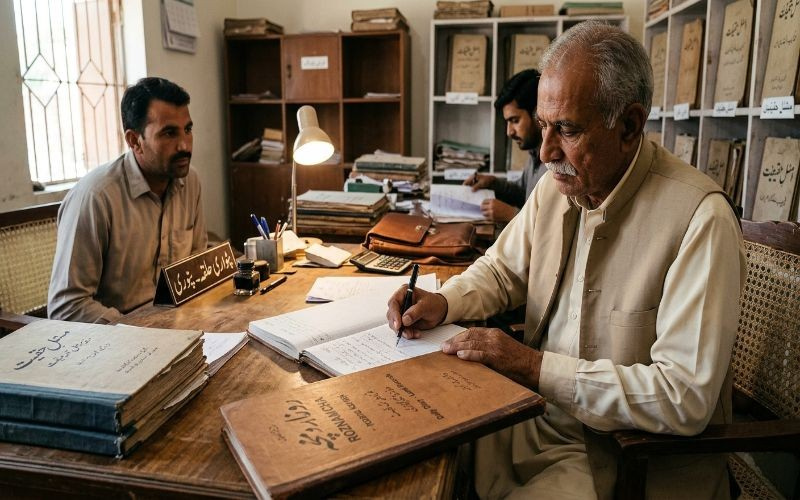

Land ownership in Pakistan does not depend only on possession or verbal claims. It is deeply connected to written revenue records maintained at the village level. Among these records, Roznamcha plays a foundational but often misunderstood role. Many land disputes, delayed mutations, and verification issues trace back to entries made,or not made,in this daily register.
Understanding what Roznamcha is, how it works, and why it matters can help ordinary citizens protect their land rights and avoid costly legal complications later.
Understanding the Meaning of Roznamcha in the Patwar System
Roznamcha literally means daily diary. In the Patwar system, it refers to a daily register maintained by the Patwari to record land-related events, observations, and official actions within a village or revenue estate.
Before diving deeper, it is important to clarify one point: Roznamcha is not a ownership document, but it strongly influences how ownership records evolve over time.
In simple terms, Roznamcha acts as a chronological log of what happens on land from an administrative perspective.
It typically records:
- Daily visits of the Patwari
- Changes observed on land
- Official proceedings
- Reports related to cultivation, possession, or disputes
These daily entries later support or explain changes made in permanent records like Jamabandi.
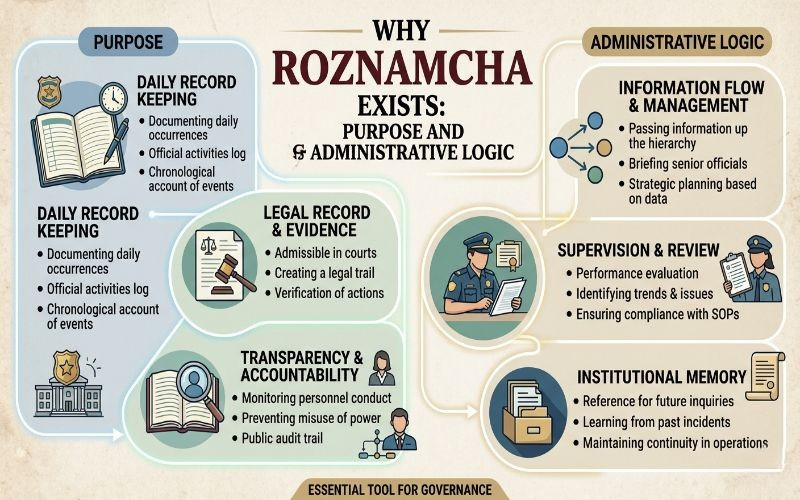
Why Roznamcha Exists: Purpose and Administrative Logic
The Patwar system was designed to maintain continuous oversight of land, not just periodic updates. Roznamcha exists to fill the gap between major record revisions.
From an administrative standpoint, its purpose is threefold:
- To ensure daily transparency in land administration
- To create a time-stamped trail of official observations
- To support higher revenue officers with factual ground reports
Without Roznamcha, many land-related decisions would rely solely on delayed or second-hand information.
This daily reporting mechanism helps prevent:
- Sudden illegal possession claims
- Unreported cultivation changes
- Manipulation of records without field verification
In essence, Roznamcha connects ground reality with official documentation.
Types of Entries Recorded in Roznamcha
Roznamcha is not a single-type register. It contains different categories of entries depending on the nature of the event being recorded. Each entry is dated and signed, making it traceable.
Common types of Roznamcha entries include:
- Field inspections and observations
- Notices issued to landowners
- Reports of disputes or objections
- Changes in possession or use
- Government instructions or orders
- Natural events affecting land (floods, damage, crop loss)
These entries may seem routine, but over time they form a documented history of land activity, which can become legally significant.
Who Maintains Roznamcha and How Entries Are Made
The responsibility of maintaining Roznamcha lies with the Patwari, who works under the supervision of revenue officers such as the Qanungo and Tehsildar.
The process typically follows this structure:
- The Patwari conducts field visits or receives official instructions
- Observations or actions are written in the Roznamcha
- Entries are dated, numbered, and authenticated
- Senior officers may review or reference entries when required
Although it is a manual or semi-digital register in many areas, Roznamcha is treated as an official government record.
In Punjab, digitization efforts under bodies like Punjab Land Records Authority aim to improve transparency, but Roznamcha still retains its administrative relevance.
Roznamcha vs Jamabandi: Understanding the Difference
A common misconception is that Roznamcha and Jamabandi serve the same function. In reality, they serve very different roles within land administration.
Here is the practical distinction:
- Roznamcha records daily events and observations
- Jamabandi is the finalized record of ownership and rights
Roznamcha explains what happened, while Jamabandi confirms what legally exists.
For example:
- A possession change may first appear in Roznamcha
- After verification and legal process, it may reflect in Jamabandi
Ignoring Roznamcha can mean missing early warning signs of changes that later become permanent.
Legal Importance of Roznamcha in Land Matters
Although Roznamcha does not grant ownership, it carries evidentiary value in land-related proceedings. Courts and revenue authorities often consult Roznamcha to understand timelines and factual background.
Its legal importance lies in:
- Supporting or contradicting ownership claims
- Establishing possession history
- Verifying whether procedures were followed
- Identifying administrative negligence or manipulation
In disputes, Roznamcha entries can strengthen a case when aligned with Jamabandi, mutation records, and court orders.
Role of Roznamcha in Land Disputes and Verification
Many land disputes escalate because early administrative records are ignored. Roznamcha often contains the first official mention of a problem.
It is especially useful in cases involving:
- Encroachment claims
- Inheritance conflicts
- Boundary disputes
- Delayed mutations
- Allegations against Patwari conduct
When verified timely, Roznamcha allows landowners to raise objections early, instead of fighting long legal battles later.
Common Issues and Misuse of Roznamcha
Despite its importance, Roznamcha is not immune to misuse or negligence. Problems usually arise due to lack of public awareness.
Common issues include:
- Delayed or missing entries
- Vague or incomplete descriptions
- Failure to record objections
- Unauthorized alterations
These issues highlight why landowners should not rely blindly on officials and must remain informed.
How Ordinary Citizens Can Use Roznamcha Practically
Roznamcha is not only for officials. Citizens can use it as a preventive tool if they know when and how.
Practical steps include:
- Checking Roznamcha entries during disputes
- Requesting clarification for suspicious entries
- Using it to support objections before mutation
- Cross-checking with Jamabandi and Girdawari
Awareness converts Roznamcha from a hidden register into a protective layer for land rights.
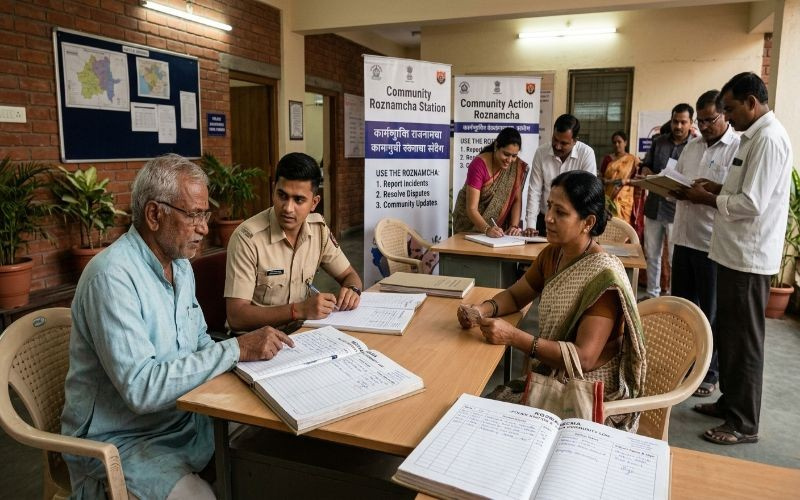
Why Understanding Roznamcha Protects Land Ownership
Land loss in Pakistan often happens silently, not suddenly. Roznamcha is where many silent changes begin.
By understanding Roznamcha:
- You gain early visibility into land activity
- You reduce dependency on verbal assurances
- You strengthen your legal position
- You avoid costly litigation
Knowledge of Roznamcha empowers landowners to engage with the system confidently instead of reacting too late.
Final Thoughts: Roznamcha as a Foundation of Land Transparency
Roznamcha may look like a simple daily diary, but its impact on land administration is far-reaching. It links field reality with legal records and creates accountability within the Patwar system.
For anyone dealing with land,whether inheritance, purchase, dispute, or verification,understanding Roznamcha is not optional. It is a practical necessity.
When used correctly, Roznamcha supports transparency, protects land ownership, and strengthens trust in land records. When ignored, it becomes a silent witness to problems that surface much later.