
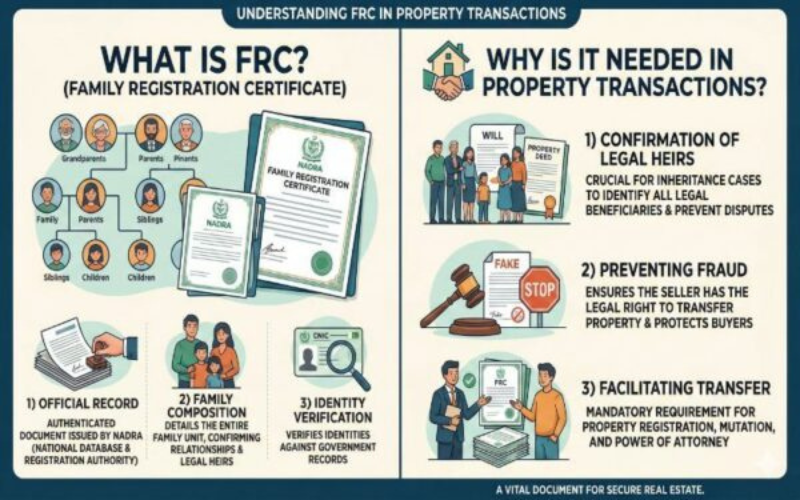

Buying or selling property in Pakistan today is no longer just about finding the right plot or negotiating the price. Documentation, tax transparency, and compliance with federal regulations have become equally important. One term that often confuses buyers,especially first-time investors and overseas Pakistanis,is FRC. Many people hear about it at the registrar’s office or from a property dealer, but very few truly understand what FRC is in property transactions and why it is required.
This article explains FRC in simple, practical language. By the end, you will know not only what FRC means, but also how it protects you, when it is mandatory, and how to obtain it without stress.
What Is FRC in Property Transactions?
Before understanding the legal pressure around it, it is important to clearly define FRC in the property context.
FRC stands for “Financial Reporting Certificate.” It is issued by the Federal Board of Revenue (FBR) and reflects a person’s declared financial position, including income, assets, and tax profile. In property matters, FRC is used to verify the financial capacity of a buyer or seller involved in a real estate transaction.
In simple words, FRC answers one basic question for the government: Does this person have a financial trail that justifies the property transaction they are entering into?
- It links property purchases with declared income
- It discourages undocumented (black money) deals
- It creates accountability in real estate transactions
This is why FRC has become increasingly relevant in Pakistan’s property market.

Who Issues the FRC and What Information Does It Contain?
Understanding who controls FRC helps remove much of the fear around it.
The Federal Board of Revenue (FBR) issues the FRC based on data already available in its system. This data usually comes from tax returns, NTN records, banking information, and asset declarations. The certificate is not a new tax; it is simply a reporting document.
An FRC typically includes:
- Declared income history
- Assets registered under your name
- Banking and financial footprint (to a limited extent)
- Tax filer or non-filer status
Because this information already exists with FBR, the FRC is essentially a summary snapshot of your financial profile.
Why FRC Is Required for Property Deals (Logic Explained)
Many people assume FRC is designed to make life difficult for buyers. In reality, the logic behind FRC is straightforward and policy-driven.
Pakistan’s real estate sector has historically been used for:
- Parking undocumented cash
- Under-reporting property values
- Avoiding income and capital gains taxes
FRC was introduced to close this gap by linking property ownership with financial legitimacy.
The core reasons FRC is required include:
- Ensuring property purchases match declared income
- Reducing benami and proxy ownership
- Increasing transparency in the real estate sector
- Strengthening the documented economy
From a buyer’s perspective, FRC is not just a compliance tool,it is also protection against future legal and tax issues.
When Is FRC Mandatory in Pakistan?
FRC is not required in every property-related situation. Knowing when it is mandatory helps you prepare in advance and avoid last-minute delays.
Generally, FRC becomes mandatory when:
- Property value exceeds a certain threshold set by FBR
- The transaction involves a registered sale deed
- Capital gains tax assessment is triggered
- The buyer or seller is under tax scrutiny
Common situations where FRC is demanded include:
- Purchasing urban residential or commercial property
- High-value plot transfers in housing societies
- Transactions involving overseas remittances
- Corporate or partnership property purchases
If you are entering a high-value, formally registered transaction, assume that FRC may be required.
When FRC Is Not Required (Important Exceptions)
Despite popular belief, FRC is not a universal requirement for all property matters.
In certain situations, FRC may not be demanded, such as:
- Low-value rural property transactions
- Inheritance-based transfers
- Gift deeds among close blood relatives
- Certain family partition cases
However, even in these cases, registrars may still request financial clarification depending on local enforcement practices. This is why professional guidance is always recommended.
FRC for Overseas Pakistanis: What Changes?
Overseas Pakistanis often worry that FRC will complicate their investment plans. In practice, the process is slightly different,but often smoother.
For overseas buyers:
- Remittances sent through legal banking channels strengthen FRC
- Declared overseas income is acceptable
- NTN is not always mandatory if income is foreign-sourced
Overseas Pakistanis usually benefit because:
- Their income trail is documented through remittance slips
- Property purchases are already under scrutiny for AML compliance
- FBR allows flexibility if records are consistent
This makes FRC more of a verification tool than an obstacle for overseas investors.

FRC vs NTN vs CNIC: Clearing the Confusion
Many people confuse FRC with NTN or believe CNIC alone is sufficient. Each serves a different legal purpose.
Here is a simple distinction:
- CNIC: Identity verification
- NTN: Tax registration number
- FRC: Financial credibility report
While CNIC proves who you are and NTN proves you are registered with FBR, FRC proves your financial capacity. In property matters, all three may work together depending on the transaction type.
Step-by-Step: How to Obtain an FRC for Property
The process of obtaining FRC is far less complicated than most people assume.
Typically, the steps include:
- Ensuring your tax profile is updated with FBR
- Filing or updating income tax returns
- Declaring assets honestly
- Requesting FRC through FBR’s system or authorized channels
In many cases, tax consultants handle this within days if records are clean. The key is accuracy, not complexity.
Common Mistakes People Make Regarding FRC
Problems with FRC usually arise due to poor preparation rather than strict rules.
Common mistakes include:
- Under-declaring income while buying high-value property
- Relying on cash transactions without banking trail
- Delaying tax filing until the property transfer stage
- Assuming “everyone avoids FRC”
These mistakes often lead to delays, penalties, or even transaction cancellations.
What Happens If You Buy Property Without FRC?
Ignoring FRC requirements can have serious consequences, especially in urban and regulated property markets.
Potential outcomes include:
- Transaction rejection at registry
- Heavy tax penalties
- Notices from FBR
- Difficulty selling the property later
More importantly, undocumented purchases become a long-term liability, not an asset.
How FRC Protects Buyers, Sellers and the Economy
While FRC is often seen as a restriction, it actually serves multiple protective roles.
For buyers, FRC:
- Ensures legal ownership
- Reduces future tax disputes
- Improves resale credibility
For sellers:
- Validates transaction legitimacy
- Protects against under-valuation allegations
At a national level, FRC:
- Supports economic documentation
- Discourages black money
- Improves investor confidence
Final Thoughts: Making Property Transactions Safer and Smarter
Understanding what FRC is and why it is needed in property transactions can save you time, money, and legal stress. Rather than avoiding it, informed buyers and sellers treat FRC as part of responsible ownership.
Property remains one of the safest investments in Pakistan,but only when backed by proper documentation. FRC ensures that your investment stands strong not just today, but years down the line.
If you approach it with clarity and honesty, FRC becomes a tool of confidence,not fear.