
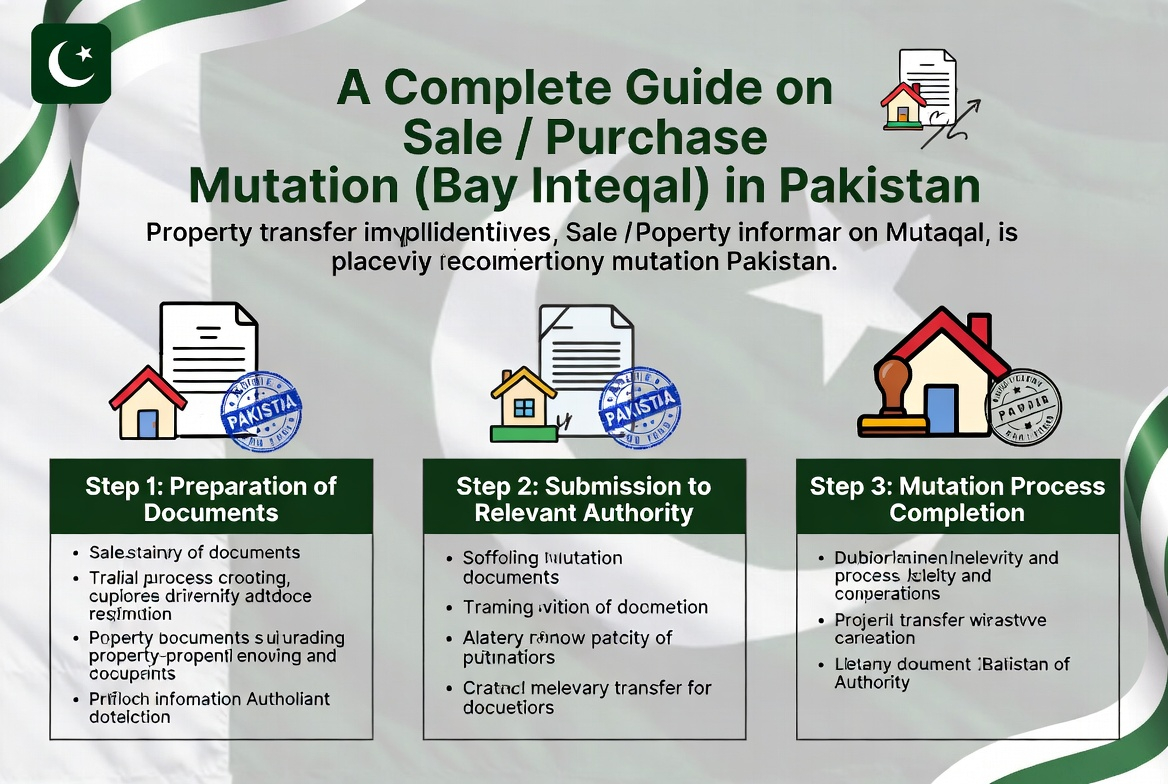

Buying or selling property does not legally end with signing the registry papers. One of the most misunderstood yet critical steps that follows is Sale / Purchase Mutation, commonly known as Bay Inteqal. Unfortunately, many buyers assume that once the sale deed is registered, ownership is fully transferred,only to face serious legal and revenue issues later.
This guide explains Sale Purchase Mutation (Bay Inteqal) in a clear, practical, and legally accurate way, so you understand what it is, why it matters, and how to complete it correctly without unnecessary delays or disputes.
What Is Sale / Purchase Mutation (Bay Inteqal)?
Sale / Purchase Mutation, locally called Bay Inteqal, is the official process of updating land revenue records to reflect the new owner’s name after a property sale. While registry records the transaction, mutation records ownership change in government land records.
In Pakistan’s land revenue system, mutation is essential because revenue authorities rely on these records to identify the lawful owner for taxation, possession, and future transactions.
Key points to understand:
- Mutation does not create ownership, but it officially recognizes it
- It updates Jamabandi, Fard, and revenue registers
- Without mutation, the seller’s name may still appear in official records
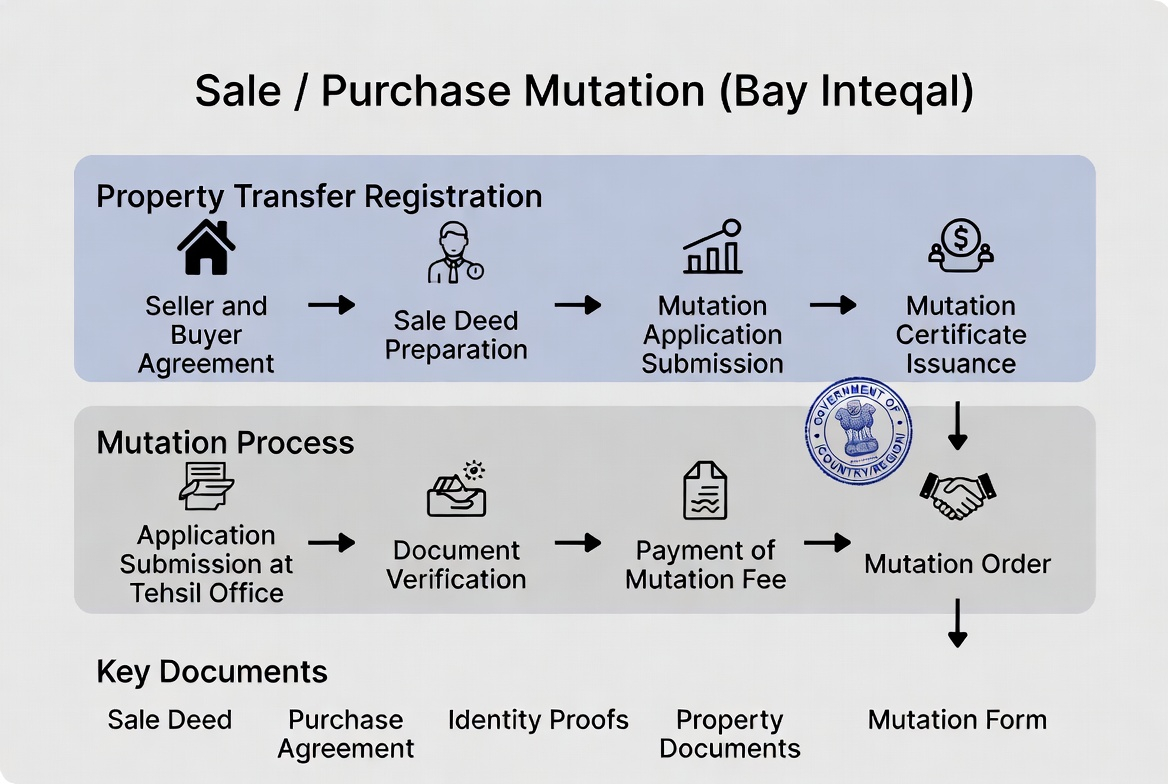
Difference Between Sale Deed (Registry) and Mutation
Many property disputes arise because people confuse registry with mutation. While they are linked, their purposes are different.
A sale deed (registry) is a legal document proving that a transaction has occurred between buyer and seller. Mutation, on the other hand, is an administrative process that updates land revenue records based on that transaction.
To clarify further:
- Registry is handled by the Sub-Registrar
- Mutation is handled by the Land Revenue Department
- Registry proves sale; mutation proves recorded ownership
Ignoring mutation can leave ownership legally vulnerable, even with a registered sale deed.
Why Sale Purchase Mutation Is Legally Important
Sale Purchase Mutation (Bay Inteqal) protects the buyer’s rights in practical and legal ways. Without it, future ownership claims become weak and complicated.
Mutation is important because it:
- Establishes the buyer as owner in government records
- Allows future sale, inheritance, or gifting
- Prevents seller’s heirs from raising false claims
- Enables correction of land revenue taxes
In real-life cases, buyers who skip mutation often face issues when applying for loans, selling the property, or proving ownership in court.
When Should Mutation Be Done After Sale?
Mutation should be applied for immediately after registry, ideally within 30 days. Delays increase the risk of objections, missing documents, or record mismatches.
Timely mutation helps:
- Avoid seller interference
- Ensure clean land records
- Prevent overlapping claims
While late mutation is possible, it usually involves more scrutiny and administrative hurdles.
Step-by-Step Sale Purchase Mutation Process in Pakistan
Understanding the process helps you avoid unnecessary dependence on agents or misinformation.
Step 1: Sale Deed Registration
The process begins after the sale deed is registered at the Sub-Registrar’s office.
Step 2: Mutation Application Submission
An application for mutation is submitted at the:
- Patwari office, or
- Land Record Center (in Punjab)
Step 3: Document Verification
Revenue officials verify the sale deed, identity documents, and land record entries.
Step 4: Public Notice & Objections
In many cases, a notice is issued allowing objections from interested parties.
Step 5: Field Verification
Patwari or revenue staff may verify possession on-site.
Step 6: Approval by Revenue Officer
Tehsildar or authorized officer approves the mutation.
Step 7: Record Update
Buyer’s name is officially entered into land revenue records.
Documents Required for Sale / Purchase Mutation (Bay Inteqal)
Having complete documentation speeds up the mutation process significantly.
Commonly required documents include:
- Registered sale deed
- CNIC copies of buyer and seller
- Latest Card (Record of Rights)
- Proof of mutation fee payment
- Passport (for overseas buyers)
- Power of Attorney (if applicable)
Missing or mismatched documents are a leading cause of mutation delays.
Mutation Fees and Official Charges in Pakistan
Mutation fees vary slightly by province and property type, but they are generally affordable compared to the value of the property.
Typically:
- Mutation fee is nominal
- Additional charges may apply for copies or verification
- No heavy tax is imposed at mutation stage
Be cautious of unofficial demands. Always confirm charges from official counters or portals.
Role of Patwari, Tehsildar, and Land Record Office
Understanding who does what helps reduce confusion and dependency on middlemen.
- Patwari: Maintains village-level land records and initiates mutation
- Tehsildar: Reviews, verifies, and approves mutation
- Land Record Center: Provides centralized, digitized services (Punjab)
Each authority plays a specific role, and knowing this helps you follow up correctly.
Online vs Manual Mutation Process
With digitization, mutation procedures have improved, especially in Punjab.
Online Mutation (Where Available)
- Faster processing
- Reduced corruption
- Better record tracking
Manual Mutation
- Still common in rural areas
- Requires physical visits
- More documentation handling
Both methods are valid, but online systems offer better transparency.
Common Mistakes During Sale Mutation
Many property owners unknowingly make errors that complicate mutation.
Common mistakes include:
- Assuming registry is enough
- Delaying mutation for years
- Relying blindly on agents
- Not verifying updated records
- Ignoring joint ownership complications
Avoiding these mistakes saves time, money, and legal stress.
How to Verify Sale Mutation in Land Records
After mutation approval, verification is crucial.
You can verify mutation by:
- Checking updated Fard
- Visiting Land Record Center
- Using official online portals (where available)
Always ensure your name appears correctly in records before considering the process complete.

What Happens If a Sales Mutation Is Not Done?
Failure to complete mutation can lead to serious consequences.
Without mutation:
- Ownership remains disputed in revenue records
- Property cannot be sold easily
- Legal heirs of seller may challenge ownership
- Courts may require additional proof
In many disputes, courts rely heavily on mutation entries alongside registry.
Special Scenarios in Sale Purchase Mutation
Certain situations require extra care and documentation.
Joint Property
All shares must be clearly recorded to avoid future disputes.
Overseas Buyers
Mutation can be completed through Power of Attorney with proper attestation.
Disputed Land
Mutation may be delayed until objections are resolved.
Final Thoughts: Why Timely Bay Inteqal Protects Your Ownership
Sale / Purchase Mutation (Bay Inteqal) is not just a formality,it is a protective shield for your property rights. While registry records the sale, mutation ensures your ownership is officially recognized by the land revenue system.
By completing mutation on time, you:
- Secure legal ownership
- Prevent future disputes
- Maintain clean land records
- Gain confidence in your investment
Whether you are a buyer, seller, or investor, understanding and completing Sale Purchase Mutation correctly is one of the smartest decisions you can make in property transactions.
Buying or selling property does not legally end with signing the registry papers. One of the most misunderstood yet critical steps that follows is Sale / Purchase Mutation, commonly known as Bay Inteqal. Unfortunately, many buyers assume that once the sale deed is registered, ownership is fully transferred,only to face serious legal and revenue issues later.
This guide explains Sale Purchase Mutation (Bay Inteqal) in a clear, practical, and legally accurate way, so you understand what it is, why it matters, and how to complete it correctly without unnecessary delays or disputes.
What Is Sale / Purchase Mutation (Bay Inteqal)?
Sale / Purchase Mutation, locally called Bay Inteqal, is the official process of updating land revenue records to reflect the new owner’s name after a property sale. While registry records the transaction, mutation records ownership change in government land records.
In Pakistan’s land revenue system, mutation is essential because revenue authorities rely on these records to identify the lawful owner for taxation, possession, and future transactions.
Key points to understand:
- Mutation does not create ownership, but it officially recognizes it
- It updates Jamabandi, Fard, and revenue registers
- Without mutation, the seller’s name may still appear in official records
Difference Between Sale Deed (Registry) and Mutation
Many property disputes arise because people confuse registry with mutation. While they are linked, their purposes are different.
A sale deed (registry) is a legal document proving that a transaction has occurred between buyer and seller. Mutation, on the other hand, is an administrative process that updates land revenue records based on that transaction.
To clarify further:
- Registry is handled by the Sub-Registrar
- Mutation is handled by the Land Revenue Department
- Registry proves sale; mutation proves recorded ownership
Ignoring mutation can leave ownership legally vulnerable, even with a registered sale deed.
Why Sale Purchase Mutation Is Legally Important
Sale Purchase Mutation (Bay Inteqal) protects the buyer’s rights in practical and legal ways. Without it, future ownership claims become weak and complicated.
Mutation is important because it:
- Establishes the buyer as owner in government records
- Allows future sale, inheritance, or gifting
- Prevents seller’s heirs from raising false claims
- Enables correction of land revenue taxes
In real-life cases, buyers who skip mutation often face issues when applying for loans, selling the property, or proving ownership in court.
When Should Mutation Be Done After Sale?
Mutation should be applied for immediately after registry, ideally within 30 days. Delays increase the risk of objections, missing documents, or record mismatches.
Timely mutation helps:
- Avoid seller interference
- Ensure clean land records
- Prevent overlapping claims
While late mutation is possible, it usually involves more scrutiny and administrative hurdles.
Step-by-Step Sale Purchase Mutation Process in Pakistan
Understanding the process helps you avoid unnecessary dependence on agents or misinformation.
Step 1: Sale Deed Registration
The process begins after the sale deed is registered at the Sub-Registrar’s office.
Step 2: Mutation Application Submission
An application for mutation is submitted at the:
- Patwari office, or
- Land Record Center (in Punjab)
Step 3: Document Verification
Revenue officials verify the sale deed, identity documents, and land record entries.
Step 4: Public Notice & Objections
In many cases, a notice is issued allowing objections from interested parties.
Step 5: Field Verification
Patwari or revenue staff may verify possession on-site.
Step 6: Approval by Revenue Officer
Tehsildar or authorized officer approves the mutation.
Step 7: Record Update
Buyer’s name is officially entered into land revenue records.
Documents Required for Sale / Purchase Mutation (Bay Inteqal)
Having complete documentation speeds up the mutation process significantly.
Commonly required documents include:
- Registered sale deed
- CNIC copies of buyer and seller
- Latest Card (Record of Rights)
- Proof of mutation fee payment
- Passport (for overseas buyers)
- Power of Attorney (if applicable)
Missing or mismatched documents are a leading cause of mutation delays.
Mutation Fees and Official Charges in Pakistan
Mutation fees vary slightly by province and property type, but they are generally affordable compared to the value of the property.
Typically:
- Mutation fee is nominal
- Additional charges may apply for copies or verification
- No heavy tax is imposed at mutation stage
Be cautious of unofficial demands. Always confirm charges from official counters or portals.
Role of Patwari, Tehsildar, and Land Record Office
Understanding who does what helps reduce confusion and dependency on middlemen.
- Patwari: Maintains village-level land records and initiates mutation
- Tehsildar: Reviews, verifies, and approves mutation
- Land Record Center: Provides centralized, digitized services (Punjab)
Each authority plays a specific role, and knowing this helps you follow up correctly.
Online vs Manual Mutation Process
With digitization, mutation procedures have improved, especially in Punjab.
Online Mutation (Where Available)
- Faster processing
- Reduced corruption
- Better record tracking
Manual Mutation
- Still common in rural areas
- Requires physical visits
- More documentation handling
Both methods are valid, but online systems offer better transparency.
Common Mistakes During Sale Mutation
Many property owners unknowingly make errors that complicate mutation.
Common mistakes include:
- Assuming registry is enough
- Delaying mutation for years
- Relying blindly on agents
- Not verifying updated records
- Ignoring joint ownership complications
Avoiding these mistakes saves time, money, and legal stress.
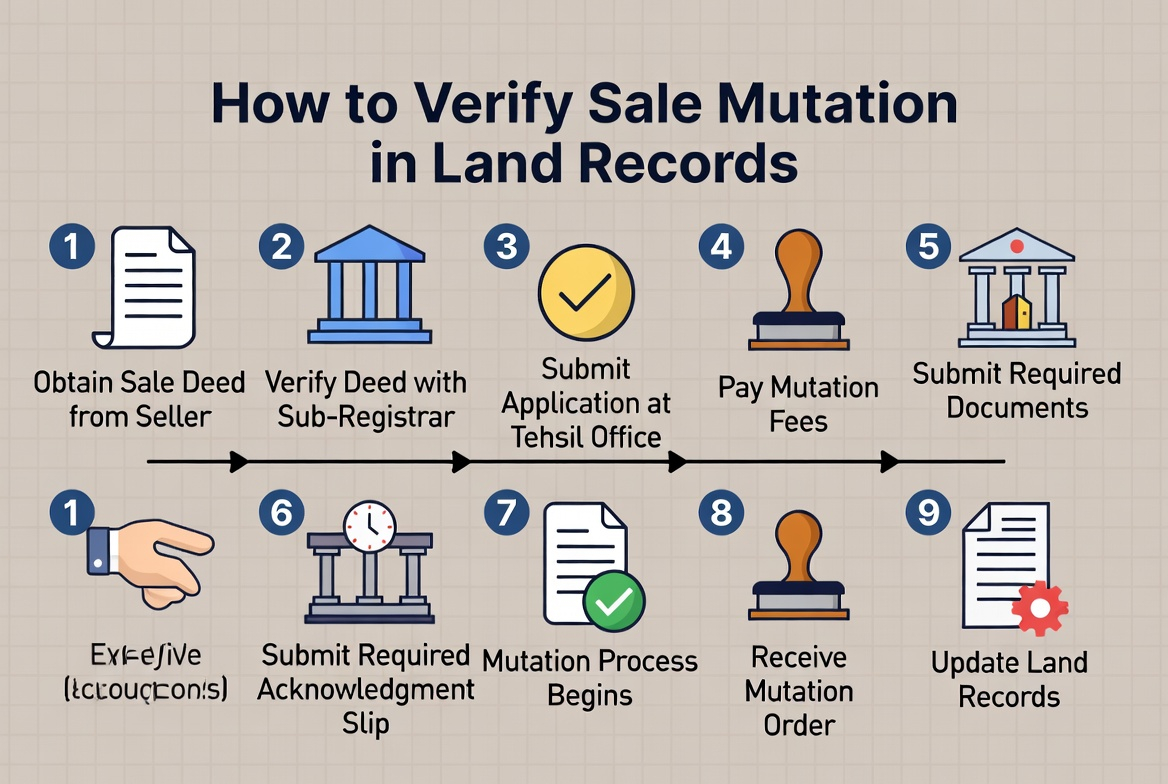
How to Verify Sale Mutation in Land Records
After mutation approval, verification is crucial.
You can verify mutation by:
- Checking updated Fard
- Visiting Land Record Center
- Using official online portals (where available)
Always ensure your name appears correctly in records before considering the process complete.
What Happens If a Sales Mutation Is Not Done?
Failure to complete mutation can lead to serious consequences.
Without mutation:
- Ownership remains disputed in revenue records
- Property cannot be sold easily
- Legal heirs of seller may challenge ownership
- Courts may require additional proof
In many disputes, courts rely heavily on mutation entries alongside registry.
Special Scenarios in Sale Purchase Mutation
Certain situations require extra care and documentation.
Joint Property
All shares must be clearly recorded to avoid future disputes.
Overseas Buyers
Mutation can be completed through Power of Attorney with proper attestation.
Disputed Land
Mutation may be delayed until objections are resolved.
Final Thoughts: Why Timely Bay Inteqal Protects Your Ownership
Sale / Purchase Mutation (Bay Inteqal) is not just a formality,it is a protective shield for your property rights. While registry records the sale, mutation ensures your ownership is officially recognized by the land revenue system.
By completing mutation on time, you:
- Secure legal ownership
- Prevent future disputes
- Maintain clean land records
- Gain confidence in your investment
Whether you are a buyer, seller, or investor, understanding and completing Sale Purchase Mutation correctly is one of the smartest decisions you can make in property transactions.