
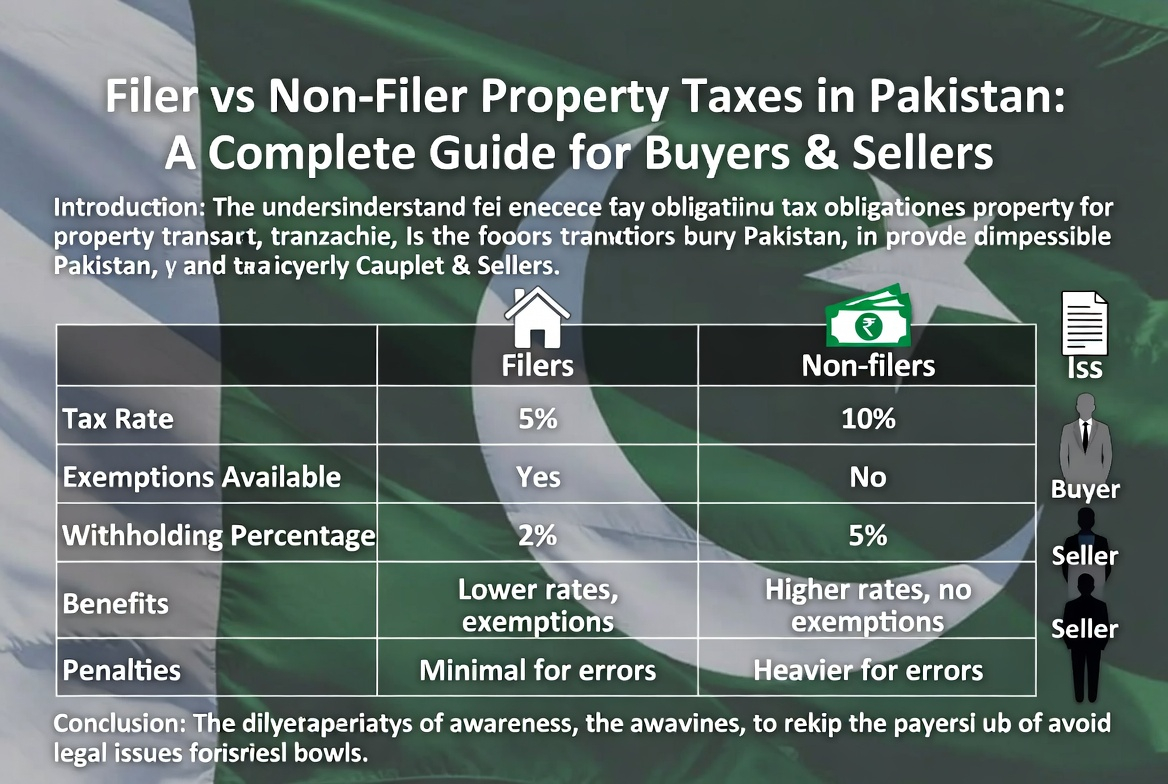

Property transactions in Pakistan are no longer influenced only by market rates or location. Your tax filer status now plays a decisive role in how much tax you pay, how smoothly your transaction proceeds, and how secure your ownership remains in the long term. The difference between a filer and a non-filer directly affects property taxes, withholding tax, capital gains tax, and documentation risk.
This guide explains filer vs non-filer property taxes in Pakistan in a clear, practical way, helping property buyers, sellers, and investors make informed decisions.
Understanding Filer and Non-Filer Status in Pakistan
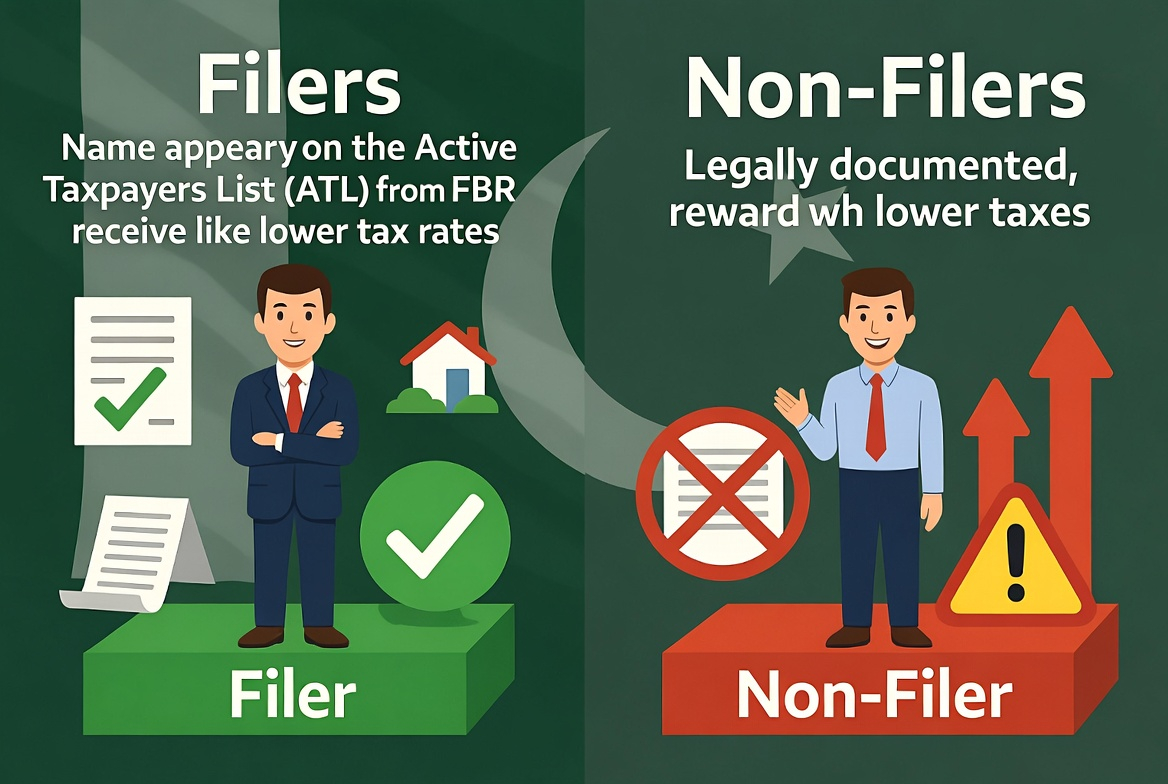
A filer is a person whose name appears on the Active Taxpayers List (ATL) issued by the Federal Board of Revenue (FBR). This confirms that the individual has filed an income tax return for the relevant tax year, regardless of whether tax was payable or not.
A non-filer is someone who has not filed an income tax return and is therefore outside the documented tax system. This status does not mean the person has no income or assets,it simply means those earnings have not been officially declared.
- Filers are legally documented and rewarded with lower taxes
- Non-filers are penalized through higher tax rates
This distinction becomes especially important in property-related matters.
Why Filer Status Matters in Property Transactions
The real estate sector is one of Pakistan’s primary tools for enforcing tax documentation. To encourage compliance, the tax system intentionally places a heavier burden on non-filers during property transactions.
Whenever you buy or sell property, multiple taxes apply at the same time. Almost all of these taxes are significantly higher for non-filers, increasing the overall cost of ownership and transactions.
This structure ensures that undocumented property dealings gradually become financially unattractive.
Withholding Tax on Property Purchase (Buyer Side)
When purchasing property, buyers must pay withholding tax under Section 236K of the Income Tax Ordinance. This tax is collected at the time of registration and deposited with FBR.
The purpose of this tax is to ensure that property buyers contribute to the tax system and that large transactions remain documented.
- Filers pay a lower percentage of the declared property value
- Non-filers pay almost double the filer rate
In high-value property purchases, this difference can translate into hundreds of thousands of rupees in additional tax for non-filers.
Withholding Tax on Property Sale (Seller Side)
Sellers are also subject to withholding tax under Section 236C, which is deducted by the buyer at the time of sale.
For filers, the deduction remains manageable and aligned with their declared income history. For non-filers, however, the deduction is much higher, significantly reducing the amount of money received after the sale.
- Filers retain more cash from the transaction
- Non-filers face heavier deductions at source
This directly affects reinvestment capacity and negotiation flexibility.
Capital Gains Tax on Property in Pakistan
Capital Gains Tax (CGT) applies when a property is sold at a profit. The tax rate depends on the holding period and the seller’s filer status.
The tax system is designed to discourage short-term speculative trading and undocumented gains. Filers benefit from structured CGT slabs, while non-filers often fall into the highest tax bracket.
This makes filer status particularly important for investors involved in property flipping or short-term resale.
Annual Property Tax and Increasing Documentation Pressure
Property ownership itself is becoming more closely monitored through data integration across departments. Utility bills, rental income, property registries, and banking transactions are increasingly cross-checked.
For non-filers, this creates growing exposure, as assets may not align with visible income records. Filers, on the other hand, face fewer complications because their assets are already documented.
- Rental income visibility
- Utility consumption records
- Property valuation data
All contribute to stronger tax profiling mechanisms.
Understanding Stamp Duty and Its Relation to Filer Status
Beyond withholding tax and CGT, stamp duty is another significant cost that affects both buyers and sellers during property transactions. Stamp duty is calculated based on the property’s declared value or the DC rate, whichever is higher, and must be paid at the time of registration.
While stamp duty rates are technically the same for both filers and non-filers, the total tax burden varies dramatically. For filers, stamp duty is just one predictable cost among others. For non-filers, the combination of higher withholding tax, elevated CGT rates, and stamp duty creates a substantially heavier financial load.
Moreover, filers can more easily claim adjustments or refunds on advance taxes paid, including portions of withholding tax, when they file their annual returns. Non-filers lose this benefit entirely, turning what should be adjustable advance tax into a permanent financial loss.
Property Tax Rates and Payment Process
In addition to one-time transaction taxes, property owners are also subject to annual property tax levied by local authorities. This tax is based on the property’s assessed rental value or capital value and must be paid regularly to avoid penalties and legal complications.
- For filers, property tax payment becomes part of a documented financial profile that strengthens their credibility with banks, government departments, and potential buyers. It also simplifies matters when applying for loans, mortgages, or business credit, as banks prefer dealing with individuals whose assets and income are transparently documented.
- Non-filers who own property face increasing scrutiny when their assets appear disproportionate to their declared income. Even if they pay property tax regularly, the absence of income tax returns raises red flags during audits or when selling property. This can lead to delays, additional questioning, and even demands for back taxes or penalties.
The shift toward digital property records and cross-department data sharing means that non-filers can no longer hide behind cash transactions or informal agreements. Property tax records, utility bills, and bank transactions are now interconnected, making undocumented ownership increasingly risky and expensive.
Practical Comparison: Filer vs Non-Filer Property Buyer
Consider two individuals purchasing identical properties in the same city.
- A filer pays lower withholding tax, completes registration smoothly, and faces minimal scrutiny later. Their property ownership aligns with declared income and banking records.
- A non-filer pays higher taxes upfront and risks future questioning if assets appear disproportionate to documented income. Even routine resale or transfer becomes more complex.
The difference is not just financial,it affects long-term security and ease of ownership.
Is Staying a Non-Filer Ever Beneficial?
In earlier years, remaining a non-filer allowed some individuals to avoid visibility. That approach no longer works in Pakistan’s modern tax environment.
Property transactions, banking channels, and national databases are now interconnected. Non-filers remain visible but pay higher taxes and penalties.
- Non-filers still face detection
- They simply pay more and receive fewer legal protections
From a practical perspective, non-filer status offers no long-term advantage.
How to Become a Filer Before Buying Property
Becoming a filer is simpler than many people assume. You only need to register on the FBR Iris portal and submit an income tax return, even if your income is low or tax payable is zero.
Once your return is filed, your name appears on the Active Taxpayers List, immediately qualifying you for lower property tax rates.
This small administrative step often results in substantial tax savings.
Common Misconceptions About Filer Status
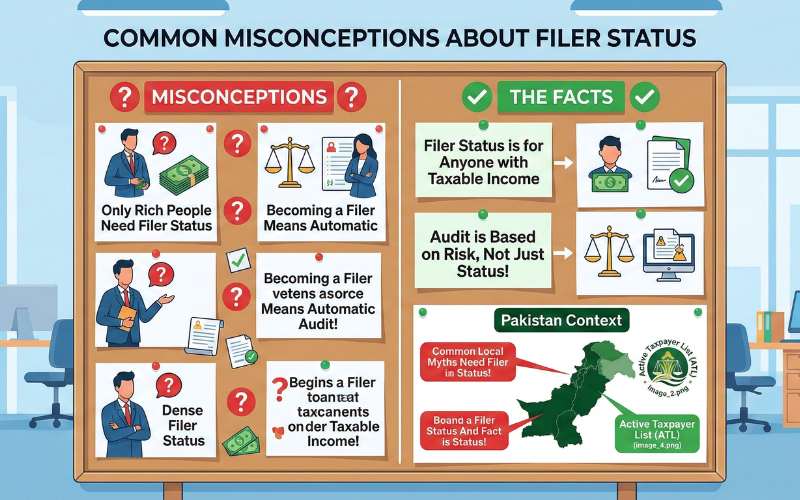
Many property owners delay filing due to misconceptions about taxation and audits.
Filing a return does not automatically result in higher taxes. In reality, not filing increases the financial burden during property transactions.
- Filing is about disclosure, not punishment
- Non-filing no longer ensures anonymity
- Delayed filing increases transaction costs
Understanding this helps avoid unnecessary losses.
Long-Term Property and Wealth Planning
Property is often purchased for long-term wealth creation, rental income, or inheritance planning. Filer status ensures smoother ownership transfers, cleaner transaction history, and easier dealings with banks and authorities.
Over time, filers enjoy greater financial stability and flexibility, while non-filers face increasing restrictions.
Final Thoughts: Filer vs Non-Filer Property Taxes in Pakistan
The reality of filer vs non-filer property taxes in Pakistan is clear. Filers pay less tax, face fewer hurdles, and enjoy greater legal and financial security. Non-filers pay more at every stage while gaining no meaningful benefit.
For anyone planning to buy, sell, or invest in property, becoming a filer is not just compliance,it is smart financial planning.