
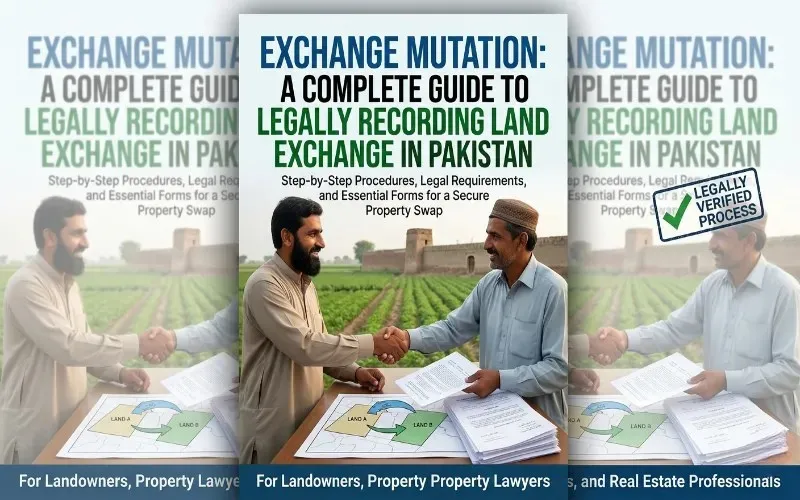

Land exchange is a common practice in Pakistan, especially in rural areas where families swap plots to consolidate holdings, improve access, or resolve long-standing boundary issues. Many people exchange land informally, believing that mutual consent is enough. Unfortunately, without exchange mutation, these arrangements remain legally weak and often become the root of future disputes.
Exchange mutation is the only way to convert a land swap into officially recognized ownership within revenue records. Without it, exchanged land may still legally belong to the previous owner on paper,no matter how long it has been used.
What Is Exchange Mutation?
Exchange mutation refers to the official process of updating land revenue records after two parties mutually exchange ownership of their properties. Unlike sale mutation, no money changes hands; instead, land is swapped based on agreement.
The purpose of exchange mutation is to ensure that the revenue record reflects the new ownership structure created through land exchange.
In practical terms, exchange mutation:
- Records exchanged ownership in Jamabandi and Intiqal
- Legally recognizes mutual transfer of land
- Prevents future ownership disputes
- Makes exchanged land eligible for sale or inheritance
This mutation does not create ownership,it formally records a mutually agreed exchange.
When Is Exchange Mutation Used in Land Records?
Exchange mutation is commonly used when landowners want to restructure holdings without engaging in sale transactions. It is especially prevalent in agricultural and semi-urban areas.
Typical situations include:
- Swapping fragmented agricultural plots for consolidation
- Exchanging land to improve access to roads or canals
- Family members adjusting land shares without sale
- Correcting impractical boundaries through mutual exchange
Even when both parties fully agree, exchange mutation is essential to protect legal rights.
Difference Between Exchange Mutation and Sale Mutation
Many people confuse exchange mutation with sale mutation, but legally and procedurally they are different.
Exchange mutation is based on mutual swap, not monetary consideration.
Key differences include:
- Sale mutation involves payment and stamp duty
- Exchange mutation involves land-for-land transfer
- Sale requires registered sale deed
- Exchange relies on exchange deed or mutual agreement
Because no sale price exists, exchange mutation often attracts lower taxes, making it attractive,but also more vulnerable if not documented correctly.
Legal Basis of Exchange Mutation in Pakistan
Exchange mutation is recognized under Pakistan’s land revenue system and supported by civil law principles governing mutual transfer of property.
The legal strength of exchange mutation comes from:
- Provincial Land Revenue Acts
- Contract principles of mutual exchange
- Revenue rules governing Intiqal
However, revenue authorities require clear documentation and consent from both parties. Any ambiguity can delay or reject the mutation.
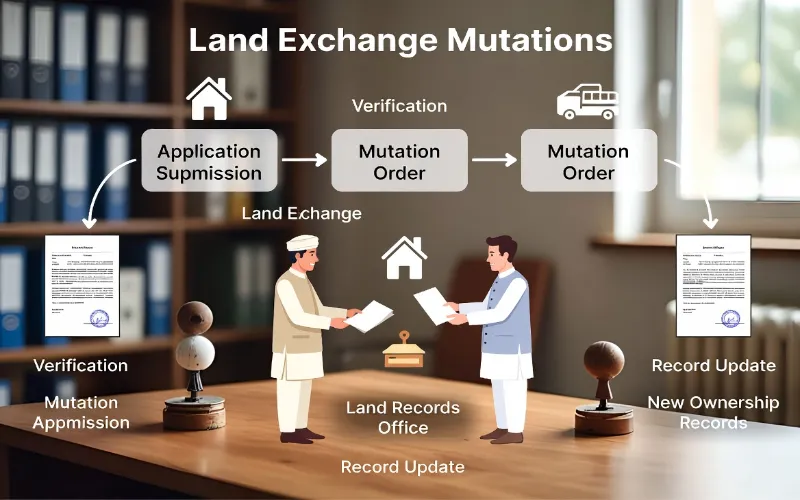
Step-by-Step Exchange Mutation Process in Pakistan
Understanding the process helps avoid unnecessary delays and reliance on middlemen. While procedures vary slightly by province, the core steps remain the same.
Step 1: Mutual Agreement Between Parties
Before approaching the revenue office, both parties must clearly agree on:
- Which land parcels are being exchanged
- Exact area and boundaries
- Ownership details
This agreement forms the foundation of the entire mutation process.
Step 2: Preparation of Exchange Deed or Written Agreement
Although verbal exchange is common, revenue authorities prefer written proof. A simple exchange deed strengthens the case significantly.
The document should include:
- Names and CNICs of both parties
- Complete land details (Khasra, Khewat)
- Clear statement of exchange without sale
This document reduces objections later.
Step 3: Submission of Exchange Mutation Application
An application for exchange intiqal is submitted to the local Patwari by both parties or their authorized representatives.
Required submission usually includes:
- Written exchange agreement
- CNIC copies of both parties
- Existing Jamabandi / Fard
- Application request for mutation
Both parties’ presence or consent is mandatory at this stage.
Step 4: Verification and Field Inspection
The Patwari verifies ownership and may conduct a site visit to confirm:
- Land identity
- Possession status
- Boundary alignment
This verification ensures that the exchange is genuine and conflict-free.
Step 5: Approval by Revenue Authorities
After verification, the mutation file moves to the Qanungo and then the Tehsildar for approval.
Once sanctioned:
- Ownership records are updated
- Exchange becomes legally recognized
- New Jamabandi reflects exchanged ownership
This final step completes the process.
Documents Required for Exchange Mutation
Incomplete documentation is the most common cause of delay. Preparing documents beforehand saves time and cost.
Typically required documents include:
- CNIC copies of both parties
- Written exchange deed or agreement
- Previous Jamabandi or Fard
- Mutation application form
In some cases, affidavits confirming mutual consent may also be required.
Role of Patwari and Revenue Authorities
Many people misunderstand the role of revenue staff, leading to frustration and mistrust.
Each authority has a specific responsibility:
- Patwari: Initiates mutation and verifies land records
- Qanungo: Checks technical accuracy
- Tehsildar: Grants final approval
Revenue officers do not decide ownership,they record it based on documents and consent.
Common Mistakes During Land Exchange
Most land exchange disputes arise not from bad intentions but from procedural neglect.
Common mistakes include:
- Exchanging land without written proof
- Delaying mutation after exchange
- Ignoring boundary clarity
- Assuming possession equals ownership
These mistakes often surface years later during sale or inheritance.
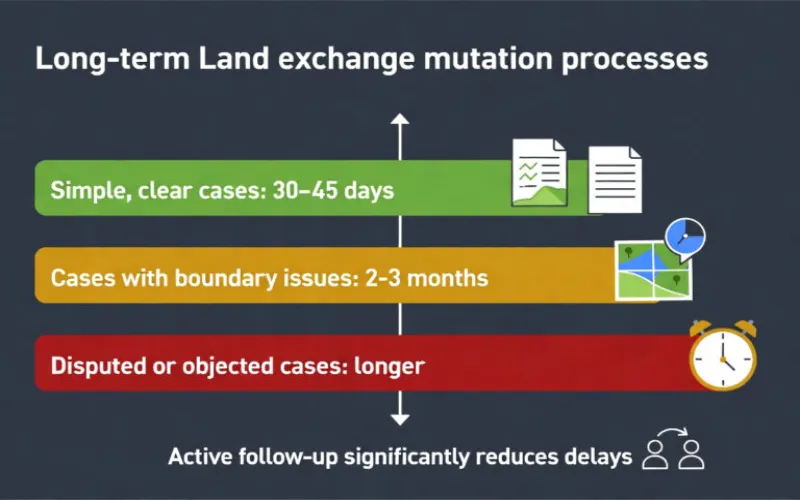
How Long Exchange Mutation Takes
The duration depends on documentation quality and cooperation between parties.
Typical timelines are:
- Simple, clear cases: 30–45 days
- Cases with boundary issues: 2–3 months
- Disputed or objected cases: longer
Active follow-up significantly reduces delays.
Risks of Not Recording Exchange Mutation
Failing to record exchange mutation can turn a mutually beneficial arrangement into a legal nightmare.
Potential risks include:
- Inability to sell exchanged land
- Problems during inheritance distribution
- Reversal of exchange by heirs
- Revenue records contradicting possession
In Pakistan, revenue records often matter more than possession in practical dealings.
Practical Tips to Avoid Objections
Experience at Tehsil level shows that small precautions prevent major delays.
Helpful tips include:
- Always prepare a written exchange deed
- Ensure both parties attend mutation proceedings
- Verify updated Jamabandi personally
- Avoid informal or verbal-only exchanges
These steps strengthen your legal position without extra cost.
FAQs on Exchange Mutation
Is exchange mutation legally valid in Pakistan? Yes, when properly documented and recorded in revenue records.
Can exchange mutation be done without a deed? Possible, but written documentation greatly reduces objections.
Does exchange mutation involve stamp duty? Usually lower than sale mutations, depending on province.
Can one party reverse exchange later? Not after mutation is sanctioned, unless fraud is proven.
Final Thoughts: Making Land Exchange Legally Secure
Exchange mutation is more than a procedural formality,it is the legal backbone of land exchange in Pakistan. Informal swaps may work temporarily, but only mutation protects ownership across generations.
Land represents livelihood, security, and family legacy. Completing exchange mutation ensures that goodwill arrangements do not turn into costly disputes later.