

Property disputes are common in Pakistan, especially when ownership is challenged due to inheritance conflicts, illegal possession, or disputed sales. Many people believe that once they win a case in court, ownership automatically transfers in government records. In reality, that is only half the journey. Court decree mutation is the final legal step that converts a court judgment into officially recognized ownership in land revenue records.
Without this step, your court victory remains incomplete and practically unenforceable at the revenue level.
What Is a Court Decree Mutation?
Court decree mutation refers to the process of updating land or property ownership records based on a civil court’s final judgment or decree. It ensures that the outcome decided by the court is formally recorded in the revenue department’s registers, such as Jamabandi and Intiqal records.
In simple terms, the court decides who is right, but mutation ensures the government officially recognizes that right.
- It does not create ownership
- It records ownership already confirmed by the court
- It links judicial authority with administrative records
This step is essential for lawful possession, future transactions, and protection against further disputes.
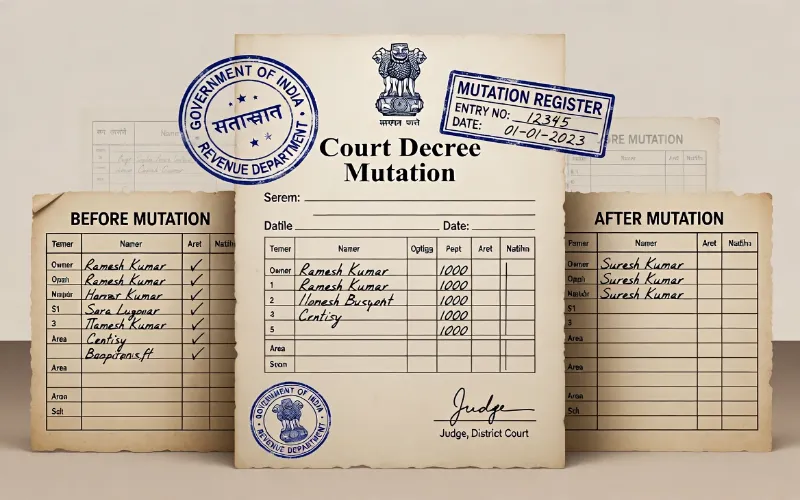
When Is Mutation Required After a Court Decree?
Not every court case requires mutation, but any judgment that affects ownership or share in property must be reflected in revenue records. This includes both full and partial ownership changes.
Common situations where mutation after court decree becomes necessary include:
- Ownership disputes between family members
- Partition cases decided by a civil court
- Cancellation of fraudulent sale deeds
- Declaratory suits confirming lawful ownership
- Correction of wrong revenue entries through court order
Even if you are already in possession of the land, failure to update mutation can create legal vulnerabilities later.
Difference Between Court Decree Mutation and Other Types of Mutation
Understanding how decree-based mutation differs from ordinary mutations helps avoid confusion at the Patwari or Tehsil office.
Court decree mutation is fundamentally different because it is not based on voluntary documents, but on judicial authority.
Key distinctions include:
- Sale mutation relies on a registered sale deed
- Inheritance mutation relies on death and family records
- Partition mutation may be consensual or administrative
- Court decree mutation is compulsory once ordered
Revenue officers cannot question the merits of a court decree, but they can verify its authenticity and finality.
Legal Authority Behind Court Decree Mutation
Court decree mutation is legally backed by Pakistan’s civil and revenue framework. Once a decree becomes final (i.e., no appeal is pending), revenue authorities are bound to act upon it.
The legal strength of this process comes from:
- Civil Procedure Code (CPC)
- Land Revenue Acts of respective provinces
- Binding nature of final court judgments
However, enforcement depends on whether the decree holder actively applies for mutation. Revenue offices do not initiate mutation automatically, even after a court decision.
Step-by-Step Process of Court Decree Mutation in Pakistan
The process may slightly vary by province, but the practical workflow remains largely the same across Punjab, Sindh, KP, and Balochistan.
It starts with preparation and ends with updated revenue records.
Step 1: Obtain a Certified Copy of the Court Decree
The first step is to collect a certified copy of the final judgment or decree from the concerned civil court.
This copy must:
- Clearly mention the property details
- Specify ownership or share awarded
- Confirm that the decree is final
Without a certified copy, mutation cannot proceed.
Step 2: Confirm Finality of the Decree
Revenue authorities require confirmation that no appeal is pending. If the decree is under challenge, mutation is usually withheld.
This confirmation may include:
- Appeal limitation period expiry
- Court endorsement of finality
- Absence of stay order
Skipping this verification is a common cause of rejection.
Step 3: Submit Mutation Application to the Patwari
Once documents are ready, an application for court decree intiqal is submitted to the local Patwari.
The application typically includes:
- Certified court decree
- CNIC copies of parties
- Previous ownership records
- Application form or written request
The Patwari initiates the mutation entry and forwards it for verification.
Step 4: Verification and Report by Revenue Staff
After submission, the revenue staff verifies:
- Property identification
- Consistency with court decree
- Absence of contradictory entries
They may also conduct a site inspection if required. This stage ensures administrative accuracy, not legal re-evaluation.
Step 5: Approval by Tehsildar or Revenue Officer
The final approval is granted by the Tehsildar or Assistant Commissioner after reviewing the file.
Once approved:
- Mutation is sanctioned
- Ownership records are updated
- Decree holder becomes officially recognized owner
This step completes the legal cycle from court to revenue record.
Documents Required for Court Decree Mutation
Incomplete documentation is one of the biggest reasons for delay. Preparing documents in advance saves weeks of follow-ups.
Typically required documents include:
- Certified copy of court decree
- Copy of judgment (if separate)
- CNICs of decree holder(s)
- Old Jamabandi or Fard
- Mutation application
In some cases, additional affidavits or indemnity bonds may be requested.
Role of Patwari, Tehsildar and Revenue Officers
Understanding who does what helps manage expectations and avoid unnecessary conflict.
Each officer has a defined role:
- Patwari: Initiates mutation entry and field verification
- Qanungo: Reviews technical accuracy
- Tehsildar: Grants final approval
Revenue officers cannot alter the decree, but they ensure procedural compliance.
Common Mistakes People Make After Winning a Decree
Winning a case often brings relief, but many people unknowingly weaken their position by ignoring mutation.
Frequent mistakes include:
- Assuming court decree updates records automatically
- Delaying mutation until property sale
- Ignoring appeal limitation periods
- Not checking updated Jamabandi
These oversights often reopen disputes that were already settled in court.
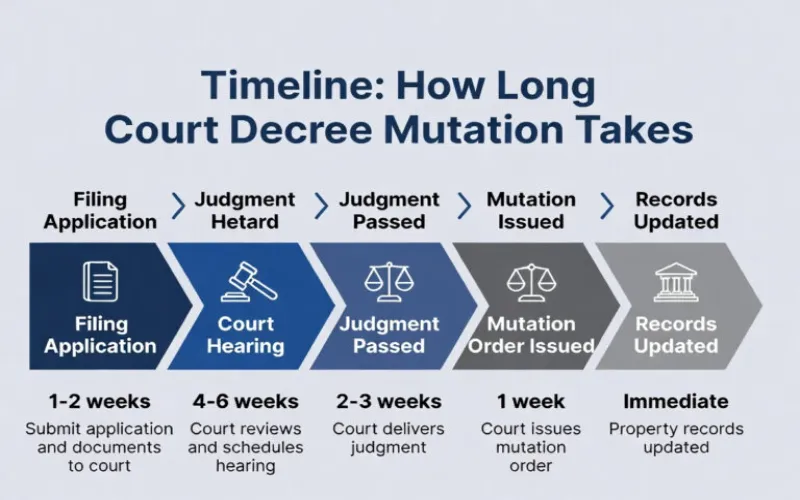
Timeline: How Long Court Decree Mutation Takes
The timeline depends on clarity of the decree and cooperation at the revenue office.
In general:
- Simple, uncontested cases: 30–60 days
- Complex or multi-party cases: 2–4 months
- Cases with objections or stay orders: longer
Proactive follow-up and complete documents significantly reduce delays.
What Happens If Mutation Is Not Done After a Court Decree?
Failure to mutate property after a decree can create serious complications, even if you legally won the case.
Potential consequences include:
- Difficulty selling or transferring property
- Risk of fraudulent re-entry by previous owner
- Problems in inheritance or partition
- Revenue records contradicting court decision
In practice, revenue records often prevail in daily transactions, not court files.
Practical Tips to Avoid Objections and Delays
Experience at the Tehsil level shows that small precautions make a big difference.
Helpful tips include:
- Apply immediately after decree becomes final
- Keep multiple certified copies ready
- Personally verify Jamabandi updates
- Maintain respectful communication with revenue staff
A proactive approach reduces dependency on agents and avoids unnecessary expenses.
FAQs on Court Decree Mutation
Is court decree mutation compulsory? Yes, if ownership or share is decided by court, mutation is essential for official recognition.
Can revenue officers refuse court decree mutation? They cannot refuse without legal grounds but may delay due to procedural issues.
Does mutation give ownership by itself? No, ownership comes from the decree; mutation records it administratively.
Can mutation proceed during appeal? Usually no, unless the court allows mutation without prejudice.
Final Thoughts: Turning Court Judgments into Legal Ownership
Court decree mutation is not a technical formality,it is the bridge between judicial justice and administrative reality. A court decision without mutation leaves ownership vulnerable, incomplete, and difficult to enforce in daily life.
Property is more than land; it is security, stability, and legacy. Completing mutation after a court decree ensures that your legal victory translates into real, lasting ownership recognized by the state.