
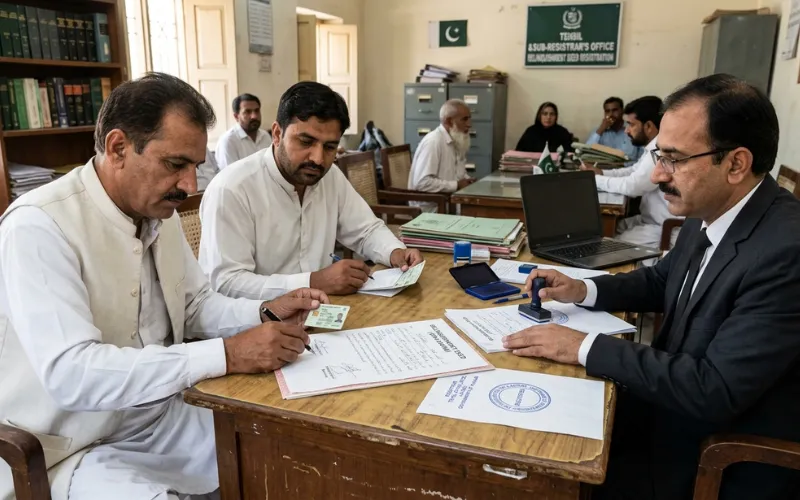

A Relinquishment Deed, known in Urdu as Tark-i-Dawa, is a legal document through which one co-heir voluntarily gives up their share in inherited property in favour of another heir or heirs. It does not involve payment in most cases. It is a formal surrender of an inheritance right, and once executed and registered, it permanently transfers the relinquishing heir’s share to the remaining co-heirs without requiring a court order or a sale.
When a Relinquishment Deed Is Used
Inherited land in Pakistan rarely arrives neatly divided. When a person dies, their property passes to all legal heirs in fractional shares under Islamic inheritance law, and all heirs become co-owners of every piece of land in the estate simultaneously. This joint ownership works on paper but creates practical difficulties when heirs want to use, sell, or independently manage the land.
A Relinquishment Deed resolves this by allowing one heir to formally step aside. The most common situations where this document becomes necessary include the following:
- A daughter choosing to relinquish her inherited share to her brothers, as is culturally common in many parts of Pakistan, though this must be done freely and not under pressure
- One sibling taking full ownership of the family home while others receive equivalent shares of other assets
- An heir who is settled abroad and does not wish to manage inherited agricultural land relinquishing in favour of a sibling who will
- Simplifying a complex multi-owner land record before a sale to a third party
The process of dividing property among heirs often involves a Relinquishment Deed as one of the instruments through which shares are consolidated before or alongside a formal partition.
Legal Basis of Tark-i-Dawa in Pakistani Law
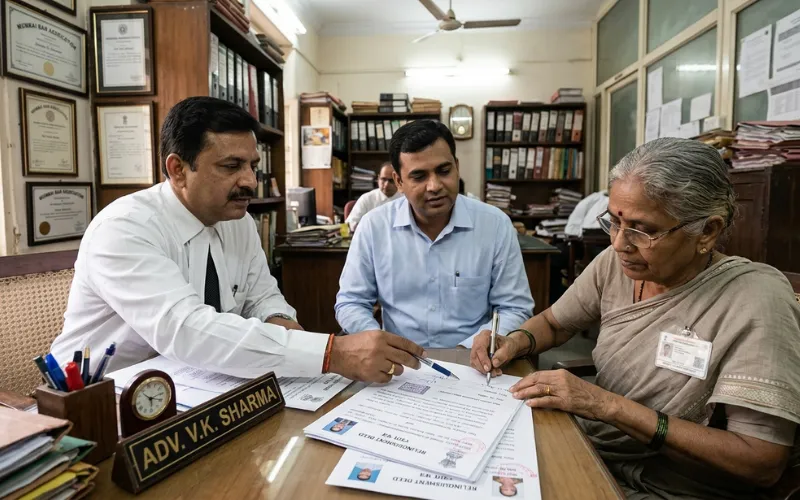
A Relinquishment Deed is not the same as a gift deed. A gift involves transferring something you already own as a clearly separate owner. In inherited land, all heirs hold undivided shares in the entire property, not separate portions, until a formal partition takes place. Tark-i-Dawa is specifically designed to address this undivided co-ownership situation by allowing one heir to surrender their undefined share to the others.
Under Pakistani law, a relinquishment between co-heirs is treated as a transfer of property and must be registered to be legally effective. An unregistered Tark-i-Dawa has limited evidentiary value and is vulnerable to challenge. The Transfer of Property Act 1882 and provincial registration laws both apply to this instrument, making formal registration at the Sub-Registrar’s office a mandatory step rather than an optional one.
It is also important to understand that a Relinquishment Deed cannot be used to give up a share to a non-heir. If an heir wants to transfer their inherited share to an outsider, that requires a registered sale deed rather than a Tark-i-Dawa. The difference between registry and mutation of property becomes relevant here because both processes are required, in sequence, to complete any transfer of inherited land whether through relinquishment or sale.
Who Must Be Involved
A valid Tark-i-Dawa involves at minimum two parties: the relinquishing heir and the heir or heirs in whose favour the relinquishment is made. Both parties must be legally competent adults. If the relinquishing heir is a minor, a court order from the guardianship court authorizing the relinquishment on the minor’s behalf is required, and the court will scrutinize such a transaction carefully to ensure it does not harm the minor’s interests.
All named beneficiaries of the relinquishment must consent to receiving the surrendered share. In practice this is straightforward when the relinquishment is in favour of one sibling, but where multiple heirs are benefiting, all of them must be named in the deed and must appear or be represented at registration.
Two witnesses must attest the deed at the time of execution. Their CNICs and signatures are recorded on the document. The registering officer at the Sub-Registrar’s office will also verify the identity of the executing parties before registering the document.
Documents Required Before You Start
Gathering documents before approaching the Sub-Registrar saves significant time and prevents the application from being returned for missing information. The list below covers what is required for a straightforward relinquishment among adult heirs with no disputes:
- Legal Heirship Certificate or Family Certificate confirming the heirs of the deceased and their shares
- Death certificate of the deceased property owner
- CNICs of all parties: the relinquishing heir, the beneficiary heir or heirs, and the two witnesses
- Most recent Fard or ownership document confirming the deceased’s registered ownership of the property
- Mutation record showing the inheritance mutation has been processed, or evidence that it is pending
- Details of the property: survey number, Deh or plot number, Taluka or district as applicable
- Valuation of the property for stamp duty calculation purposes
If the inheritance mutation has not yet been processed, it is generally advisable to complete it first so that the heirs’ names are in the official record before the relinquishment is executed. Attempting to register a Tark-i-Dawa while the land is still recorded in the deceased’s name creates complications at the Sub-Registrar’s office and at the mutation stage afterward.
Step-by-Step Procedure
The procedure for a Relinquishment Deed in Pakistan follows a defined sequence. Each step must be completed properly before moving to the next, and skipping any step creates gaps in the legal record that can cause problems later.
- Step 1: Obtain the Legal Heirship Certificate Before any deed can be drafted, the heirs must be officially established. Obtain a Legal Heirship Certificate from the local Union Council or a Succession Certificate from the civil court depending on the complexity of the estate. This confirms who the legal heirs are and what shares each holds under applicable inheritance law.
- Step 2: Complete the Inheritance Mutation File the inheritance mutation at the local Patwari office to have the heirs’ names entered into the land record in their respective shares. The inheritance mutation guide covers this process in detail. Once the mutation is sanctioned, each heir has an officially recorded fractional share in the property, which is what the Tark-i-Dawa will transfer.
- Step 3: Draft the Relinquishment Deed Have a lawyer draft the Tark-i-Dawa. The deed must clearly state the identity of the relinquishing heir, the identity of the heir or heirs in whose favour the relinquishment is made, the property being relinquished with full details including survey number and Deh, the share being surrendered expressed as a fraction, and a clear statement that the relinquishment is voluntary and without consideration or with nominal consideration where applicable.
- Step 4: Pay Stamp Duty Stamp duty is payable on the Relinquishment Deed before it can be registered. The rate varies by province and is typically calculated as a percentage of the property’s assessed value. In Sindh, the applicable stamp duty rates are set by the provincial government and should be verified at the time of execution since rates can change. Stamp duty in Pakistan applies to relinquishments as transfers of property rights.
- Step 5: Register at the Sub-Registrar’s Office Both the relinquishing heir and the beneficiary heir must appear in person at the Sub-Registrar’s office of the district where the property is located, along with the two witnesses. The Sub-Registrar will verify identities, confirm the deed’s contents, and register the document. A registered number is assigned to the deed, and certified copies are issued to the parties.
- Step 6: File for Relinquishment Mutation After registration, take the registered Tark-i-Dawa to the Patwari office and file for a mutation to update the land record. The mutation will remove the relinquishing heir’s name and increase the share of the beneficiary heir in the ownership register. Once the mutation is sanctioned by the revenue officer, the land record reflects the new ownership position. The types of mutations in revenue include relinquishment as a recognized category of transfer mutation.
Stamp Duty and Costs Involved
A Relinquishment Deed between close relatives, particularly siblings inheriting from a parent, is treated in most provinces as a transfer at a concessional or nominal value rather than a market value transaction, which affects the stamp duty calculation. However, the document still attracts stamp duty and registration fees that must be paid before the deed is registered.
Costs typically involved include stamp duty on the value of the share being relinquished, registration fees at the Sub-Registrar’s office, lawyer’s fees for drafting the deed, and Patwari fees for the subsequent mutation. The total cost is modest compared to a commercial property transaction but should be budgeted for before starting the process.
Attempting to undervalue the property on the deed to reduce stamp duty is a common but risky practice. If the Sub-Registrar believes the stated value is significantly below market value, they can refer the valuation for re-assessment, which delays registration and may result in a higher stamp duty demand.
When One Heir Refuses to Cooperate
A Relinquishment Deed is a voluntary instrument. No heir can be forced to relinquish their share. If one heir refuses to participate in a voluntary settlement, the remaining heirs cannot process a Tark-i-Dawa that purports to cover that heir’s share.
In situations where co-heirs cannot agree on voluntary division, the appropriate remedy is a partition suit filed in the civil court or a revenue court partition application. The court has the authority to order a formal partition of the property even without the consent of all parties. Revenue courts in Pakistan handle partition disputes among co-owners and can direct the revenue department to physically demarcate each heir’s share once a partition order is issued.
If one heir’s whereabouts are unknown, perhaps they are abroad or have not been in contact with the family, the remaining heirs can seek a court order appointing a representative for the absent heir before proceeding. Acting without accounting for an absent heir’s share risks a later legal challenge that can unwind the entire transaction.
Special Situation: Daughter Relinquishing Her Share
In Sindh and across Pakistan, it is common for daughters to sign a Tark-i-Dawa in favour of their brothers after a parent’s death. Legally, this is entirely valid provided it is done freely, without coercion, and with the daughter’s full understanding of what she is giving up.
Pakistani courts and the compulsory heirs framework in Pakistani law are clear that a daughter’s inheritance share cannot be taken from her without her consent. A Tark-i-Dawa signed under pressure, without the daughter appearing before the Sub-Registrar in person, or without her being independently advised of her rights, is a document that courts have set aside when challenged.
If a daughter genuinely wishes to relinquish, her personal appearance at the Sub-Registrar is the clearest protection for everyone involved. It creates a contemporaneous official record that she appeared voluntarily, confirmed her identity, and executed the deed in person, which is difficult to challenge afterward.

After the Mutation: Confirming the Record Is Clean
Once the relinquishment mutation is sanctioned and the land record reflects the updated ownership, each remaining heir should obtain a fresh Fard document confirming their new share. The Fard is the individual ownership certificate that proves the current record accurately reflects the post-relinquishment position.
If the property also has any outstanding land revenue dues or property tax obligations, these should be settled and transferred into the name of the heir who now holds the larger or full share. Leaving tax records in the relinquishing heir’s name after the ownership change creates unnecessary complications in future transactions.
The register of rights in land revenue will reflect the updated position at the next Jamabandi revision, but the mutation record is the operative document in the interim and should be kept safely alongside the registered Tark-i-Dawa.
Frequently Asked Questions
What is a Relinquishment Deed (Tark-i-Dawa) and how is it different from a gift deed
A Relinquishment Deed (Tark-i-Dawa) is a legal instrument through which one co-heir voluntarily surrenders their undivided share in inherited property to one or more other heirs. It is different from a gift deed because a gift transfers a separately owned asset from one person to another, while a Tark-i-Dawa deals specifically with undivided co-ownership arising from inheritance where no heir holds a separate, identifiable portion yet. A Relinquishment Deed can only be used among co-heirs. If the share is being transferred to a non-heir, a registered sale deed is required instead.
Is registration of a Relinquishment Deed mandatory in Pakistan
Yes. A Relinquishment Deed that transfers an heir’s share in immovable property must be registered at the Sub-Registrar’s office to be legally effective. An unregistered Tark-i-Dawa is not binding on third parties and carries significantly limited evidentiary value in court. Registration involves both parties appearing before the Sub-Registrar, verifying their identity, paying the applicable stamp duty and registration fee, and having the document entered into the official register. After registration, a mutation at the revenue office is also required to update the land record.
Can a daughter’s relinquishment be challenged after she has signed the deed
A registered Relinquishment Deed executed by a daughter who appeared personally before the Sub-Registrar and voluntarily confirmed its contents is very difficult to challenge afterward. However, courts in Pakistan have set aside Tark-i-Dawa documents where there is evidence of coercion, undue pressure, the daughter’s illiteracy without proper explanation of the document, or absence of the daughter at registration with someone else signing in her place. For the deed to be fully protected, the daughter must appear in person, understand what she is signing, and have that appearance recorded in the Sub-Registrar’s register.
What happens if one heir refuses to relinquish their share
A Relinquishment Deed requires the voluntary participation of the relinquishing heir. No heir can be forced to execute a Tark-i-Dawa. If one heir refuses to cooperate in a voluntary division, the remaining co-heirs must seek a formal partition through the civil court or revenue court. The court has authority to order compulsory partition of jointly held property among co-owners and can direct the revenue department to physically demarcate each heir’s allocated share once a partition order is issued. The refusal of one heir to relinquish does not block the others from obtaining a court-ordered division.
Does the relinquishing heir get any payment in a Tark-i-Dawa
A Relinquishment Deed is typically executed without financial consideration between close relatives, particularly siblings relinquishing in favour of each other. However, consideration is not legally prohibited. If the relinquishing heir receives a payment in exchange for giving up their share, that amount should be honestly stated in the deed because it affects the stamp duty calculation and the legal characterization of the transaction. An undisclosed payment that is later discovered can be used to challenge the nature of the deed or the stamp duty paid on it.