
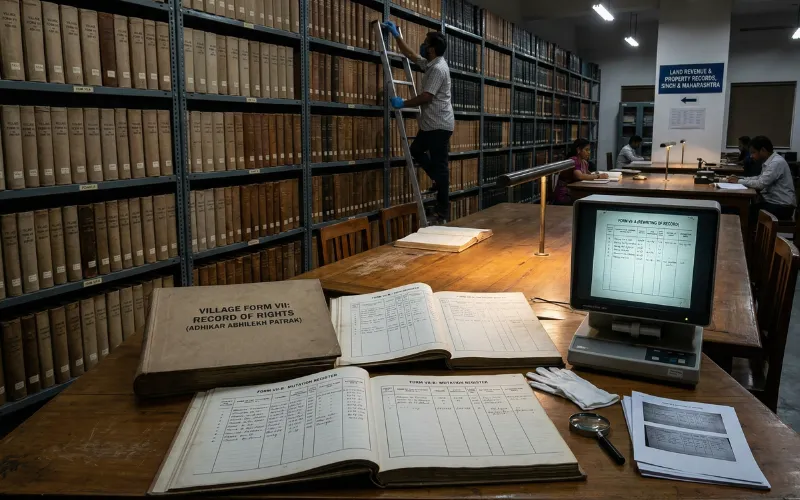

When people deal with land records in Pakistan, they often come across Form VII and Form VII-B mentioned together and assume the two are interchangeable. They are not. Each form records a fundamentally different legal fact about the same piece of land, and confusing the two can lead to real mistakes during property purchases, inheritance settlements, and dispute proceedings.
Two Forms:One Land Parcel, Two Different Questions
Both Form VII and Form VII-B belong to the village-level land record system maintained by the Patwari. They apply to the same survey numbers within a revenue estate, but they answer two completely separate questions. Form VII answers the question of who holds the legal title to a piece of land. Form VII-B answers the question of who is actually sitting on or cultivating that land at any given time.
That distinction, between legal ownership and physical possession, is one of the foundational principles of Pakistan’s land revenue law. A person can own land without being in possession of it, and another person can be in lawful possession without being the legal owner. Form VII and Form VII-B exist precisely because the law treats these two facts separately and records each of them independently.
What Form VII Records
Form VII is the ownership register. It is the document that establishes who holds the legal title to each survey number in a revenue village. When most people ask about their land record, this is the form that contains the answer they are looking for.
The entries in Form VII capture the full ownership profile of every landholding within the Deh. Each entry records the owner’s name along with their parentage, their fractional share if the land is jointly held, the mode by which they acquired ownership, and any encumbrances or liabilities registered against the holding. The mode of acquisition is particularly significant because it tells you whether the current ownership came through a purchase, an inheritance, a gift, a court decree, or some other recognized legal route.
Form VII is updated every time a mutation is sanctioned by the revenue officer. A sale mutation brings a new buyer’s name into the form. An inheritance mutation records the heirs in place of the deceased. Agift deed mutation enters the name of the person to whom land was gifted. The types of mutations in revenue determine what changes in Form VII and how those changes are recorded.
What Form VII-B Records
Form VII-B is the possession register. It records who is in physical possession or occupation of each survey number, regardless of whether that person is the legal owner.
The entries in Form VII-B include the name of the person in possession, their relationship to the owner, the nature of the possessory right they hold, and the area they are occupying. A cultivating tenant, a mortgagee who has taken possession of land as security, a lessee under a formal lease agreement, or a person holding land under a specific contractual arrangement would all appear in Form VII-B rather than Form VII.
The critical point about Form VII-B is that it records lawful possession, not illegal occupation. Encroachers are not entered in Form VII-B because their occupation has no legal basis. Someone appearing in Form VII-B has a recognized right to be on the land, even though they do not own it. That recognized right carries legal consequences that directly affect the owner’s ability to deal with the property.
Why the Distinction Matters in Practice
Understanding that Form VII and Form VII-B capture different legal facts helps explain why both forms must be reviewed before any serious land transaction or dispute.
If you look only at Form VII, you see who owns the land on paper. But if Form VII-B records a long-term tenant with occupancy rights over the same plot, the owner’s practical control over that land is significantly constrained. In most provinces of Pakistan, an occupancy tenant recorded in the possession register over a sufficient period acquires statutory rights that cannot simply be overridden by a sale. A buyer who purchases land without checking Form VII-B may find themselves owning a plot they cannot freely use or develop.
This is one of the most common sources of land disputes in Pakistan. An owner sells land to a buyer, the buyer takes title through Form VII, and then discovers the person farming the land has a Form VII-B entry establishing possessory rights that predate the sale. Resolving that dispute requires revenue proceedings and sometimes litigation, all of which could have been avoided by checking both forms upfront.
How Ownership and Possession Can Diverge
There are several common situations in Pakistan’s agricultural land context where the Form VII owner and the Form VII-B possessor are different people. Each situation has its own legal implications.
The most frequent scenario is tenancy. A landowner who does not cultivate their own land may rent it out to a cultivating tenant. The tenant’s name appears in Form VII-B with the nature of right recorded as cultivating tenant, while the owner’s name remains in Form VII. As long as the tenancy continues, both entries coexist.
Another common scenario involves mortgage with possession. When a landowner takes a loan and hands over possession of the land to the lender as security, the lender’s name enters Form VII-B as mortgagee in possession. The owner’s name stays in Form VII because the mortgage does not transfer title, only possession. The mortgage mutation process in Pakistan documents exactly how this arrangement is recorded at the revenue level.
A third scenario arises in inheritance situations. After a landowner dies, the heirs may continue the existing tenancy arrangements while the inheritance mutation is pending. The tenant remains in Form VII-B throughout that period, and the deceased’s name may still appear in Form VII until the inheritance mutation is formally processed and the heirs’ names are entered.
Reading Both Forms Together
Treating Form VII and Form VII-B as a pair rather than separately gives a complete and accurate picture of any landholding. Here is what to look for when reviewing both:
- If Form VII shows a sole owner and Form VII-B shows no possession entries, the owner has full unencumbered control of the land.
- If Form VII shows a sole owner but Form VII-B shows a cultivating tenant, any sale must account for the tenant’s rights before vacant possession can be guaranteed.
- If Form VII shows multiple co-owners and Form VII-B shows a mortgagee in possession, both the co-ownership structure and the mortgage must be resolved before a clean transfer is possible.
- If Form VII-B shows a possession entry but the corresponding Form VII ownership is contested or unclear, that combination is a serious red flag requiring legal investigation before any transaction proceeds.
The register of rights in land revenue brings these two dimensions together in the Jamabandi, which is the formally authenticated record prepared every four years by consolidating ownership and possession data along with cultivation records.
The Role of the Patwari in Keeping Both Forms Current
The Patwari is responsible for maintaining both Form VII and Form VII-B accurately and ensuring they reflect current ground reality at all times. This is not a passive record-keeping task. It requires the Patwari to conduct periodic field visits, record seasonal tenancy arrangements, note when mortgages are discharged and possession is returned to the owner, and update both forms whenever a mutation changes the legal position.
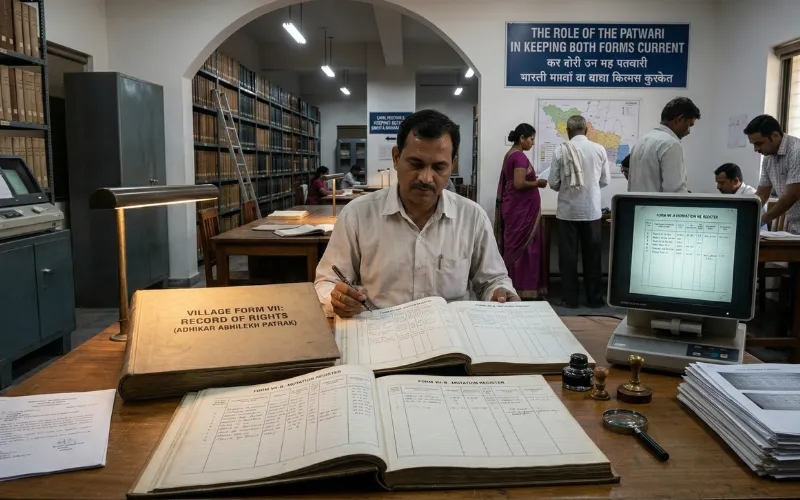
The duties of a Patwari in Pakistan explicitly include presenting both forms during revenue inspections and ensuring that possession entries in Form VII-B are consistent with the ownership entries in Form VII. Discrepancies between the two forms, where the ownership has changed but the possession record has not been updated, or where a tenancy has ended but the Form VII-B entry was never removed, are among the most common record-keeping failures at the Patwari level.
When you suspect a discrepancy between what Form VII and Form VII-B show for your land, the Qanungo is the first supervisory authority to approach. The Qanungo inspects Patwari records across multiple Halqas and can direct corrections when entries in either form are found to be inaccurate or outdated.
How Form VII-B Affects Property Sales and Transfers
When land is sold, the sale mutation updates Form VII to replace the seller’s name with the buyer’s name. But Form VII-B does not automatically clear. Any possession entries that existed before the sale remain in place until they are formally terminated through the appropriate legal process.
A tenant’s entry in Form VII-B is not erased simply because the ownership changes. The tenant’s rights run with the land, not with the owner. This is why reviewing the difference between registry and mutation of property matters because registration and mutation update the ownership record in Form VII, but they do not resolve possessory rights recorded in Form VII-B.
If a buyer wants vacant possession, the tenancy must be legally terminated before or as part of the transaction. If a mortgage with possession is being discharged as part of a sale, the mortgagee’s Form VII-B entry must be removed through a formal discharge mutation before the buyer’s ownership in Form VII is clean and unencumbered.
Using Both Forms in Inheritance and Division Cases
In inheritance situations, both forms become important at different stages of the process. Form VII shows what the deceased owned and in what shares. Form VII-B shows what tenancy or possession arrangements were in place at the time of death.
Before dividing land between family members through a formal partition, heirs need to account for any Form VII-B entries because those possessory rights affect how the land can be physically divided. If a tenant occupies a specific portion of the agricultural holding, the partition must either allocate that portion to one heir who then deals with the tenancy, or the tenancy must be resolved first so the land can be divided freely.
The inheritance mutation guide covers how ownership is formally transferred to heirs through the mutation process, updating Form VII. But the Form VII-B situation requires a separate assessment because tenancy rights are governed by land tenancy law rather than inheritance law, and the two processes run in parallel rather than together.
Getting Certified Copies of Both Forms
Certified copies of both Form VII and Form VII-B can be obtained from the Patwari of your Halqa. You will need your CNIC, the survey number, the Hissa number if applicable, and the name of the revenue village. Present these details and request certified extracts of both forms for the relevant survey number.
If you are conducting pre-purchase due diligence, ask specifically for the possession column alongside the ownership record. Some landowners only request a Fard document, which covers the Form VII ownership data, without realizing that the Form VII-B possession data is a separate document that must be requested explicitly. Always ask for both.
Frequently Asked Questions
What is the main difference between Form VII and Form VII-B in land records
Form VII is the ownership register. It records who holds the legal title to a survey number, their ownership share, and how they acquired that right. Form VII-B is the possession register. It records who is physically occupying or cultivating the land, which may be a tenant, a mortgagee in possession, or a lessee rather than the legal owner. The two forms coexist because Pakistani land revenue law treats legal ownership and physical possession as separate facts with separate legal consequences. Both must be reviewed to get a complete picture of any landholding.
Can someone appear in Form VII-B without appearing in Form VII
Yes. A tenant, mortgagee in possession, or lessee will appear in Form VII-B as the person in possession without appearing in Form VII as the legal owner. Form VII records the person who holds title. Form VII-B records the person who holds physical possession under a recognized legal right. These are frequently two different people, particularly in agricultural areas where landowners lease out their holdings to cultivating tenants while retaining legal title.
Does buying land clear the Form VII-B possession entries automatically
No. A sale mutation updates Form VII to replace the seller’s name with the buyer’s name, but it does not automatically remove possession entries from Form VII-B. Any tenancy or mortgagee-in-possession entry that existed before the sale continues in Form VII-B until it is formally terminated through the appropriate legal process. Buyers who want vacant possession must ensure all Form VII-B entries are resolved either before or as a formal condition of the transaction. Failing to check this is one of the most common causes of post-sale disputes in Pakistan’s agricultural land market.
Why is it important to check Form VII-B before purchasing agricultural land
Agricultural land in Pakistan frequently has tenancy arrangements recorded in Form VII-B. A long-term tenant may have acquired occupancy rights under the land tenancy laws of the relevant province, giving them statutory protection that survives a change of ownership. Buying land without checking Form VII-B means potentially inheriting a legal obligation to a tenant that the seller never disclosed. Verifying both forms before any purchase is the only way to confirm whether the land comes with vacant possession or with pre-existing possessory rights attached.
How are errors in Form VII and Form VII-B corrected
Errors in either form are corrected through a written application to the Tehsildar or district revenue officer. The officer will direct the Patwari to conduct a field inquiry to verify the correct position on the ground. If the error in Form VII involves a disputed ownership entry, the matter may be referred to a revenue court for adjudication. If the error in Form VII-B involves a possession entry that was never removed after a tenancy ended, the correction requires the Patwari to conduct a field inspection confirming current possession and then update the register accordingly under the supervision of the Qanungo.