
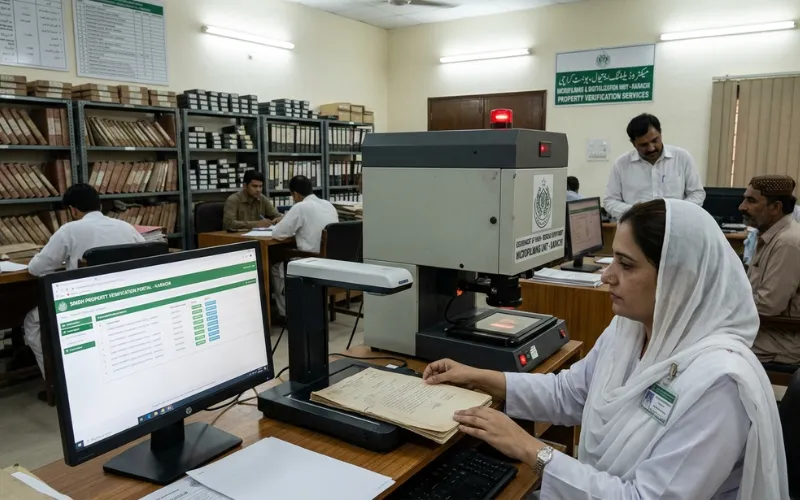

If you want to verify whether a property in Karachi has a legitimate registered title, the Microfilming Unit at the Sindh Revenue Department is the official source for checking the history of registered documents. It holds scanned records of deeds, sale agreements, and other instruments that were registered at Karachi’s Sub-Registrar offices, and it is where property buyers, lawyers, and banks go to confirm what is officially on record before any transaction.
What the Microfilming Unit Is and Why It Exists
Karachi’s property registration records go back decades, and for most of that time they existed only as physical registers held in district Sub-Registrar offices. Over time, deterioration, misplacement, and deliberate destruction of documents became serious problems. The Microfilming Unit was established to create a centralized, durable archive of all registered property documents in Karachi by photographing and digitizing them onto microfilm rolls and later into digital formats.
The unit operates under the Sindh Revenue Department and functions as both an archive and a verification service. When you request a search or a certified copy through the Microfilming Unit, you are checking the centralized record of what was officially registered, which is independent of what any individual Sub-Registrar office may or may not be able to produce from its own files at any given time.
This independence is its most important feature. A document that appears in the Microfilming Unit record was genuinely registered at the time. A document that does not appear despite the seller claiming registration is a serious red flag that warrants investigation before any transaction proceeds. Fraud and manual errors in property records remain a significant risk in Karachi, and the Microfilming Unit is one of the most reliable tools available to detect fraudulent or unregistered documents before they cause financial harm.
What Records Are Available Through the Microfilming Unit
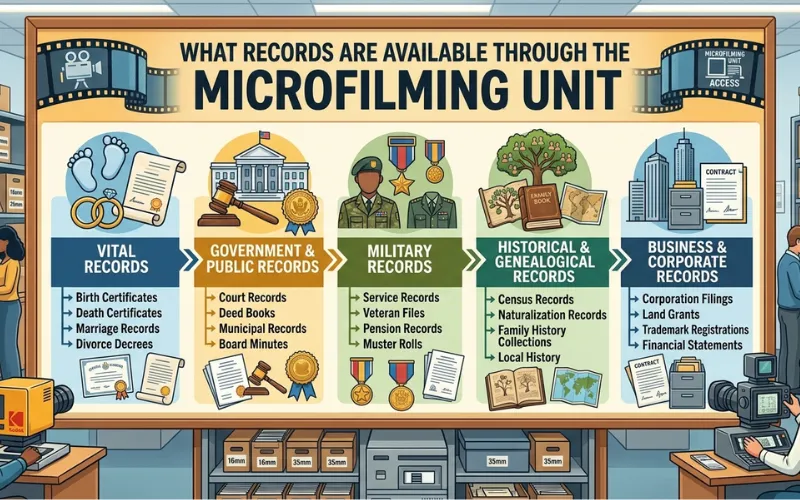
The Microfilming Unit holds scanned copies of documents registered at Karachi’s district Sub-Registrar offices across its multiple registration zones, covering South, East, West, Central, Malir, and other districts of the city. The types of documents accessible through this archive include the following:
- Registered sale deeds (Bay Nama) covering property purchases
- Gift deeds (Hiba Nama) transferring property as a gift
- Mortgage deeds registered by banks and private lenders
- Lease agreements and tenancy deeds that were formally registered
- Exchange deeds and relinquishment deeds
- Power of attorney documents that were registered for property transactions
- Court decrees and orders that were registered with the Sub-Registrar
The archive does not cover documents that were never registered in the first place. Many property transactions in Karachi, particularly older ones and those in informal settlements, were conducted through unregistered agreements. The absence of a document from the Microfilming Unit does not automatically mean the transaction did not occur. It means it was not formally registered, which is itself a significant piece of information about the property’s legal standing.
How to Conduct a Property Verification Search
The Microfilming Unit accepts search requests for registered documents based on the property details you provide. The search retrieves any registered documents linked to those details across the time period covered by the archive.
To initiate a search, you need to provide the following information:
- The complete property address and plot number or survey number
- The registration district, such as Karachi South, East, or West, in which the property is located
- The approximate period you want searched, such as from the year of the first transaction you know about to the present
- The names of any known owners or parties to previous transactions if available
- Your own CNIC and contact details as the person requesting the search
The search is conducted against the indexed microfilm and digital records. Where a match is found, the unit produces a summary of registered documents linked to that property along with reference numbers and registration dates. You can then request certified copies of specific documents from that record.
Online Access and the Digital Verification Portal
The Sindh government has been expanding digital access to property records through the Board of Revenue Sindh’s online platforms. For Karachi specifically, the digitization of Microfilming Unit records has progressed sufficiently that some searches can be initiated online or through designated service centres without requiring a full physical visit to the unit’s office.
The functions of the Board of Revenue include overseeing the digitization and public accessibility of all provincial land and registration records. Where the online portal is available for your district, you can enter property details and receive a preliminary search result indicating whether registered documents exist in the archive for that property.
However, for a certified copy of any registered document, a physical visit or a formal written request remains necessary in most cases. The online portal typically confirms existence and provides reference numbers. Obtaining the actual document in certified form requires either collecting it from the office or having a lawyer or authorized representative do so on your behalf.
For overseas Pakistanis who cannot visit in person, safe ways to manage property remotely include granting a power of attorney to a trusted person in Karachi who can physically request and collect certified copies from the Microfilming Unit.
Reading a Microfilming Unit Search Result
A search result from the Microfilming Unit that returns multiple registered documents is not necessarily a problem. Properties that have changed hands several times will have multiple sale deeds on record. What matters is whether the chain of registered documents is consistent and complete.
A clean ownership chain shows the property moving from one owner to the next through registered sale deeds, with each seller matching the previous buyer. A chain with gaps, where a sale deed names a seller who does not appear in any previous registration as a buyer, raises questions about how that person acquired the property and whether an intermediate transaction was never registered.
Reviewing the difference between registry and mutation of property helps understand why both the registered deed and the revenue mutation must match. A registered sale deed without a corresponding mutation means the registration happened but the land record was never updated. A mutation without a corresponding registered deed means the revenue record changed but there may be no registered legal instrument to support it.
If a mortgage deed appears in the search results, verify with the relevant bank or lender whether that mortgage has been formally discharged and whether the discharge document was also registered. An undischarged mortgage appearing in the Microfilming Unit record is an active encumbrance regardless of what the seller tells you verbally. The mortgage mutation process covers how mortgage discharge is handled at the revenue level, but the discharge deed itself must also be registered to appear in the Microfilming Unit archive.
Verifying a Property Through Both the Microfilming Unit and the Revenue Record
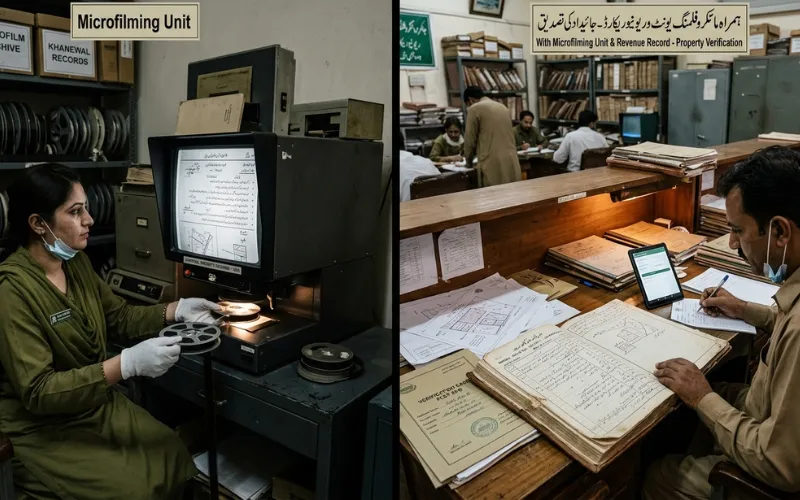
A complete due diligence check for a Karachi property requires verification through two separate systems, not just one. The Microfilming Unit covers registered documents at the Sub-Registrar level. The revenue record covers ownership, possession, and mutation history at the Patwari and Tehsildar level. For most urban properties in Karachi these two systems should tell a consistent story. When they do not, the inconsistency is itself the most important finding.
For properties registered through a housing scheme or development authority, a third layer of verification is required from the relevant scheme’s own records. The Karachi Development Authority, Defence Housing Authority, and other bodies maintain their own allotment and transfer records that must also be checked.
Always obtain a certified Fard document from the revenue office alongside the Microfilming Unit search. The Fard shows who is currently registered as the owner in the revenue system, while the Microfilming Unit shows what registered instruments created that ownership chain. Both together give a complete picture that neither can provide alone.
For revenue land that may also be affected by conversion to residential use, checking whether agricultural land has been formally reclassified before accepting any representation from the seller about its legal status is an important additional step.
Common Red Flags Found Through Microfilming Unit Searches
Experience with Karachi property transactions reveals certain patterns in Microfilming Unit search results that should prompt immediate caution and further investigation before proceeding. The following findings in a Microfilming Unit search are red flags that require explanation from the seller and independent verification:
- A property with no registered document at all, despite the seller claiming it has been bought and sold multiple times
- A sale deed registered in the seller’s name that does not match the name on any earlier registered document in the chain
- An active mortgage registered by a bank that the seller has not disclosed and claims does not exist
- Multiple sale deeds for the same property registered around the same time period, suggesting possible double-selling
- A registered power of attorney that was used to sell the property, where the actual owner’s current status and awareness is unclear
- Documents that were registered but whose stamp paper appears inconsistent with what would have been prescribed at that time
Each of these patterns has appeared in documented Karachi property fraud cases. Land disputes in Pakistan frequently trace back to one of these specific document problems, and identifying them at the verification stage rather than after the purchase is the entire purpose of the Microfilming Unit search.
What to Do When the Microfilming Unit Cannot Find a Document
A common situation that arises is where the seller produces a photocopy of a registered document but the Microfilming Unit search cannot locate it in the archive. There are two possible explanations, and they lead to very different responses.
The first possibility is a digitization gap. Not all older Karachi registration records have been successfully digitized, particularly documents from earlier decades or from offices that experienced record damage. In this case, the unit can be asked to conduct a manual search of the physical microfilm rolls for the relevant period and district. This takes longer but may find the document if it was genuinely registered.
The second possibility is that the document was never registered or is a forgery. A document that cannot be found in either the digital or physical microfilm archive, and for which no registration number can be verified independently, should be treated with serious suspicion. Proceeding with a property purchase based on an unverifiable document is one of the most direct routes to a disputed title situation.
In either case, do not proceed with the transaction until the registration is independently confirmed. Request the registration number, date, and the Sub-Registrar office where the document was registered, then verify those details directly with that office rather than relying solely on what the seller provides.
E-Stamp Paper Verification as a Complementary Check
Since the introduction of e-stamp paper in Pakistan, all properly executed registered documents should be on e-stamp paper with a verifiable code. Checking the e-stamp paper verification system alongside the Microfilming Unit search provides an additional layer of confirmation that the physical document presented by a seller matches what is in the official stamp record.
A document presented on what appears to be older stamp paper but purporting to be from a period after e-stamping became mandatory in Sindh is a serious inconsistency that requires immediate investigation. Conversely, a document whose e-stamp code verifies correctly and whose registration number appears in the Microfilming Unit archive gives you strong confirmation that the document is genuine.
Protecting Your Transaction After Verification
Once verification through the Microfilming Unit confirms that the chain of registered documents is clean and consistent, and the revenue record matches, the next step is completing the purchase through a properly executed and registered sale deed with applicable stamp duty paid correctly. The registered sale deed then becomes part of the Microfilming Unit archive itself, extending the chain of verified documents for the next owner.
After registration, file for a sale mutation at the revenue office to update the land record with your name. Once the mutation is sanctioned, obtain a fresh Fard confirming your ownership in the revenue system. At that point, you have verification at both levels: a registered deed in the Microfilming Unit archive and a mutation-supported Fard in the revenue record, which together represent the most complete form of documented property ownership in Karachi.
Frequently Asked Questions
What is the Microfilming Unit in Karachi and what records does it hold
The Microfilming Unit is a centralized property document archive operated by the Sindh Revenue Department. It holds scanned and digitized copies of all documents registered at Karachi’s Sub-Registrar offices, including sale deeds, gift deeds, mortgage deeds, lease agreements, power of attorney documents, and court decrees that were formally registered. The unit was established to create a durable central archive independent of individual Sub-Registrar offices, and it functions as the primary official source for verifying whether a property document in Karachi was genuinely registered.
How do I verify a property document through the Microfilming Unit in Karachi
To verify a property document, submit a search request to the Microfilming Unit with the property’s address or plot number, the registration district, the approximate period to be searched, and any known parties’ names. The unit will search its indexed records and produce a summary of registered documents linked to that property. Where the digital portal is available, preliminary searches can be initiated online. For certified copies of specific documents, a physical visit or formal written request is required. A lawyer or authorized representative with a valid power of attorney can conduct the search and collect documents on your behalf.
What does it mean if a property document cannot be found in the Microfilming Unit archive
If a seller’s document cannot be found in the Microfilming Unit archive, there are two possibilities. The first is a digitization gap, where older documents from certain periods or districts have not yet been successfully digitized. In that case, a manual search of the physical microfilm rolls for the relevant period can be requested. The second possibility is that the document was never registered or is a forgery. A document that cannot be located in either the digital or physical archive, and for which no verifiable registration number exists, should not be accepted as proof of title. The transaction should be paused until independent verification of the registration is obtained directly from the issuing Sub-Registrar office.
Why should I check both the Microfilming Unit and the revenue record for a Karachi property
The Microfilming Unit and the revenue record are two separate systems covering different aspects of property ownership. The Microfilming Unit holds registered instruments such as sale deeds and mortgage deeds, confirming what formal transactions were registered at the Sub-Registrar level. The revenue record, accessed through the Patwari and Tehsildar, shows the current ownership position in the land record including any mutations. A complete due diligence check requires both because a registered deed without a corresponding mutation means the legal record was never updated, and a mutation without a registered deed means the revenue change may lack a formal legal instrument to support it. Inconsistencies between the two systems are the most important findings in any property verification exercise.
Is an online Microfilming Unit search sufficient for property due diligence in Karachi
An online search through the Board of Revenue Sindh’s digital portal confirms whether registered documents exist in the archive and provides reference numbers. It is a useful starting point but is not sufficient on its own for complete due diligence. A certified physical copy of each registered document in the chain is required to verify the details, confirm the stamp paper and registration stamps, and identify any encumbrances such as mortgages or court orders. The online search should be followed by a request for certified copies, a cross-check with the revenue record Fard, and where applicable an e-stamp paper verification of all documents in the chain.