

Foreign investment in Pakistan’s real estate and agriculture has grown steadily over the past decade, especially with interest from overseas Pakistanis, Gulf investors, and agri-business firms. This naturally raises a critical question: can foreigners buy agricultural land in Pakistan? The short answer is no, not directly in most cases,but the complete answer is far more nuanced and practical than a simple yes or no.
This guide explains the law, reality, and legal alternatives in clear terms, helping investors, overseas Pakistanis, and professionals understand what is allowed, what is restricted, and what paths are legally viable in 2025.
Understanding Agricultural Land Laws in Pakistan
To understand whether foreigners can own agricultural land, it’s essential to first understand how land law works in Pakistan. Unlike many countries, land in Pakistan is not governed by a single national statute.
Land matters are primarily handled at the provincial level, with administrative oversight by each province’s Board of Revenue (BoR). Agricultural land, in particular, is treated as a strategic and sensitive asset because it relates to food security, rural livelihoods, and national sovereignty.
Key features of Pakistan’s land system include:
- Separate treatment of agricultural, residential, and commercial land
- Manual and digital land records such as Jamabandi, Khasra, and Mutation
- Strong restrictions on transfer of agricultural land to non-locals or non-citizens
This framework sets the foundation for restrictions on foreign ownership.

Can Foreigners Buy Agricultural Land in Pakistan?
Under current Pakistani law, foreign nationals cannot directly purchase or own agricultural land in Pakistan in their personal capacity.
This restriction exists across all provinces, including Punjab, Sindh, Khyber Pakhtunkhwa, and Balochistan. The rationale behind this policy includes:
- Protection of local farmers
- Prevention of land speculation
- Preservation of national food resources
- Avoidance of foreign control over rural land
In simple terms, non-Pakistani citizens are legally barred from owning agricultural land outright.
However, this does not mean foreigners are entirely excluded from agricultural investment. The law restricts ownership, not participation.
Difference Between Foreigners and Overseas Pakistanis
A major source of confusion arises between foreigners and overseas Pakistanis, and the law treats these two groups very differently.
An overseas Pakistani is a Pakistani citizen residing abroad and holding:
- A valid Pakistani passport, or
- A NICOP (National Identity Card for Overseas Pakistanis)
Because citizenship is the deciding factor, overseas Pakistanis are legally allowed to own agricultural land, subject to provincial rules.
Key distinctions:
- Foreign nationals: Cannot own agricultural land
- Overseas Pakistanis (citizens): Can own agricultural land
- Dual nationals: Allowed if Pakistani citizenship exists
This distinction is crucial and often misunderstood by investors relying on incorrect advice.
Province-Wise Overview of Agricultural Land Rules
Although the restriction on foreigners is uniform, provincial nuances still matter when planning any agricultural investment.
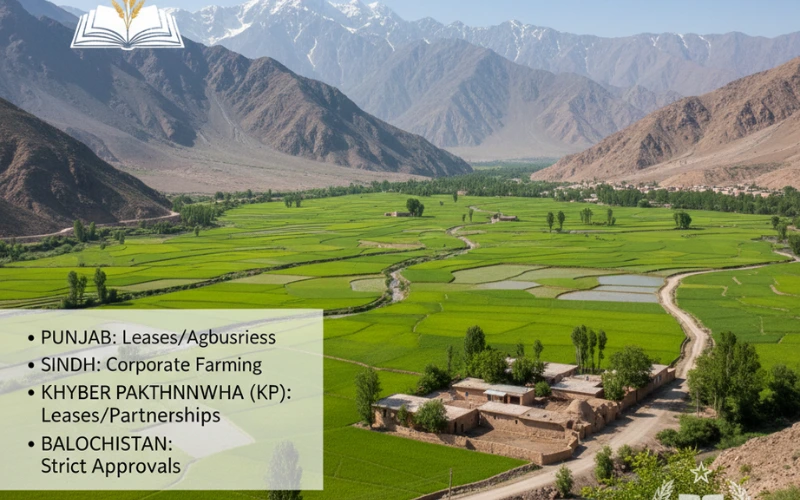
Punjab
Punjab has the most structured land record system and strictly enforces agricultural land ownership rules. Foreigners cannot purchase land, but long-term leases and registered agribusiness entities are commonly used.
Sindh
Sindh allows foreign participation mainly through corporate farming projects, subject to approvals. Individual foreign ownership remains prohibited.
Khyber Pakhtunkhwa (KP)
KP enforces tight controls on agricultural land transfer. Leases and partnerships are allowed but closely monitored.
Balochistan
Balochistan is the most sensitive province in land matters. Foreign ownership is not allowed, and even leases often require higher-level approvals.
Legal Alternatives Available to Foreigners
While direct ownership is restricted, Pakistan’s legal system provides several lawful alternatives for foreigners interested in agriculture.
These options are commonly used by international investors and agri-business firms.
Long-Term Agricultural Lease
One of the most practical options is leasing agricultural land from a Pakistani owner.
Typical lease features include:
- Lease terms ranging from 10 to 99 years
- Registered lease deeds
- Rights to cultivate, harvest, and commercially use produce
- No ownership transfer
Joint Ventures with Pakistani Nationals
Foreign investors can legally partner with Pakistani landowners through structured joint ventures.
Common arrangements include:
- Land contributed by Pakistani partner
- Capital, technology, or expertise from foreign partner
- Profit-sharing agreements
- Clear exit clauses
This approach is widely used in commercial farming, dairy projects, and seed production.
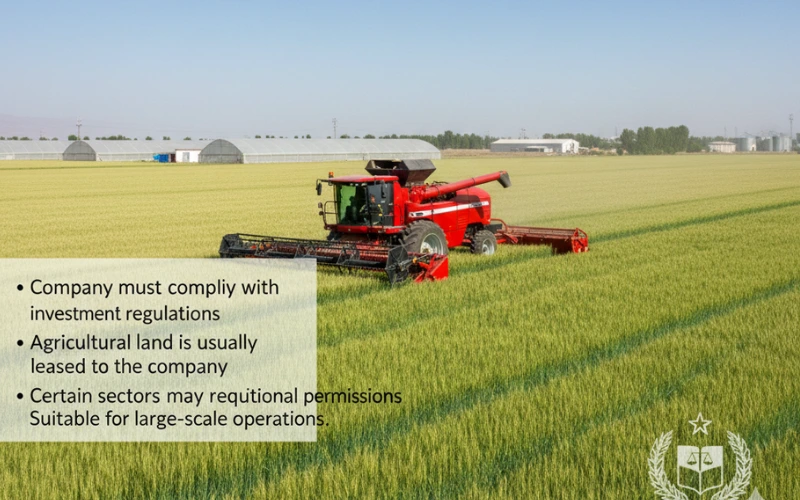
Company Ownership Route (SECP Registered)
Foreigners can register a Pakistani company with the Securities and Exchange Commission of Pakistan (SECP). While this does not automatically permit land ownership, it creates a legal vehicle for leasing and project development.
Important points:
- Company must comply with foreign investment regulations
- Agricultural land is usually leased to the company
- Certain sectors may require additional permissions
This method is suitable for large-scale agricultural operations.
Why Benami or Proxy Ownership Is Risky
Some foreigners are advised to buy land “in a local’s name.” This practice, commonly called benami ownership, is illegal in Pakistan.
Risks include:
- Criminal liability under anti-benami laws
- Loss of investment without legal remedy
- Inability to enforce ownership rights
- Future disputes with land record authorities
Courts in Pakistan have increasingly taken a strict stance against benami arrangements, making this option extremely dangerous.
Role of Government Permissions and Authorities
Foreign involvement in agriculture often requires interaction with multiple authorities.
These may include:
- Provincial Board of Revenue
- Local land revenue offices
- SECP for company matters
- Ministry of Interior (in special cases)
Approvals depend on:
- Nature of agricultural activity
- Scale of investment
- Location of land
- National security considerations
Proper documentation and transparency are essential at every step.
Practical Scenarios: What Foreigners Can Realistically Do
To make this clearer, consider a few realistic scenarios.
A Gulf investor wants to grow olives in Punjab. They cannot buy land, but they can lease 500 acres under a registered lease and operate through a Pakistani company.
A European agritech firm wants to test seed technology. They can partner with a Pakistani landowner and run pilot projects without owning land.
An overseas Pakistani living in the UK wants farmland in Sindh. As a Pakistani citizen, they can legally purchase agricultural land subject to local procedures.
These scenarios show that planning matters more than assumptions.
Common Misconceptions About Foreign Land Ownership
Many problems arise because of misinformation. Some common myths include:
- “Foreigners can buy land if they invest enough”
- “Company ownership bypasses land laws”
- “Long-term possession equals ownership”
In reality, citizenship status and land classification are the deciding factors, not investment size or influence.
Risks and Compliance Considerations
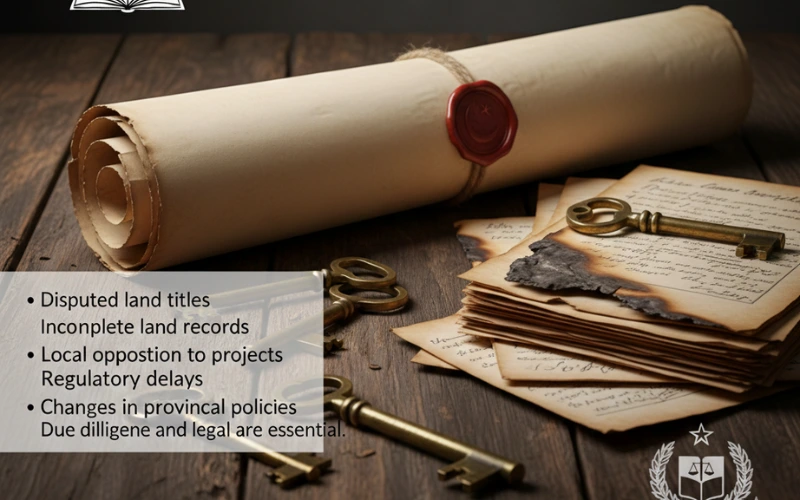
Foreign investors must be aware of several practical risks.
These include:
- Disputed land titles
- Incomplete land records
- Local opposition to projects
- Regulatory delays
- Changes in provincial policies
Conducting due diligence, verifying land records, and using qualified legal counsel is not optional,it is essential.
When Legal Advice Becomes Essential
If any of the following apply, professional legal advice is critical:
- Investment exceeds small-scale leasing
- Land is near borders or sensitive zones
- Project involves multiple partners
- Long-term capital is at stake
Agricultural land law in Pakistan is technical, and small mistakes can lead to major losses.
Final Verdict: Can Foreigners Buy Agricultural Land in Pakistan?
To conclude clearly and honestly:
- Foreigners cannot directly buy or own agricultural land in Pakistan
- Overseas Pakistanis with citizenship can
- Legal alternatives exist through leases, partnerships, and companies
- Illegal shortcuts carry serious financial and legal risks
Pakistan welcomes foreign participation in agriculture,but within a regulated legal framework. Those who understand and respect this framework can invest successfully, while those who ignore it often face costly consequences.
If approached strategically, agricultural investment in Pakistan can be both lawful and rewarding,without violating land ownership laws.
